I was struck with a sense of awareness finally dawning as I tuned in and watched Animal House. I knew the hype about National Lampoon, about their films and how they were cult comedy to be admired; I just hadn't really watched any of their stuff. But thinking I knew a bit about comedy and such (just a bit, not much) I thought it was about time I rolled back the clock and checked it out. I was eminently pleased I did.
Animal House tells the story of two college freshmen picking their frat house. Rather than wind up at one of the exclusive, preppy fraternities they wind up in the Animal House, filled with beer-swilling, party-loving miscreants who believe that the pursuit of happiness should outweigh all else. Well, that or just that they don't care about much at all. Threatened with closure, the boys set out to wreak as much havoc as possible. They lose girlfriends and respect along the way; they lose all sense of what they should be achieving at college. And yet they find each other and a common purpose binds them.
It seems so obvious how much National Lampoon obviously influenced so many comedies of the 90s and 00s; many come to mind that must be in their debt. But there's a subtlety to some of Animal House's humour, some lines that slip by nearly unnoticed, that I savoured above all else. The slapstick element is clearly present, but it's underpinned by some cleverer antics, some delicious twists of expectation that keep the movie a delight from beginning to end. It is anything but predictable.
So, on to the next few I suppose.
~~~
1978
John Belushi, Tom Hulce, Stephen Furst
dir. John Landis
Saturday, 13 March 2010

Rambo
Sylvester Stallone wrote the first Rambo: First Blood screenplay; much like he would do when wrote Rocky, it was another moment when Sly took his career into his own hands and created a character for himself to shine. Shine being the operative word. Then in the late Noughties he decided to reinvent both Rocky and John Rambo by revisiting the franchises. He seems to have misunderstood his own creation with the latest Rambo film entirely.
Rambo appears to be an almost complete parody of itself. John Rambo now lives outside of Burma, catching snakes for a living and boating around in his skiff. He is extremely gruff and about double the size he was in the first film some twenty years ago. He is almost entirely characterless. Compared to the drifter of First Blood, trying his utmost to avoid difficulties and clearly scarred after trauma in conflict in Vietnam, this new Rambo is an empty husk without enough interest for an audience even for the brief hour and a bit the film runs for.
Then there's the violence. Rambo is mercilessly violent, but so are the military Burmese as they slaughter Christians in villages. From the news-broadcast style opening to the close of shooting the film is pockmarked by over-the-top violence that is neither necessary nor really offers anything to the film. It's horrific, but also seemingly didactic, as if to suggest that violence is a way of life that can be opted for. Rambo claims killing is in his blood. But there's no alternative really offered by the film, no chance for any kind of redemption.
Perhaps that's the strength of the picture: Stallone has taken his violent creation and let the monster run rampant in a balls-to-the-walls high-voltage explosion fest. Maybe. Or maybe Stallone was dizzied by how much it is possible to simulate with modern CGI techniques and let the excitement of a super-shoot take over actually writing a script or plot with any kind of credibility at all.
~~~
2008
Sylvester Stallone
Written and dir. Sylvester Stallone
Rambo appears to be an almost complete parody of itself. John Rambo now lives outside of Burma, catching snakes for a living and boating around in his skiff. He is extremely gruff and about double the size he was in the first film some twenty years ago. He is almost entirely characterless. Compared to the drifter of First Blood, trying his utmost to avoid difficulties and clearly scarred after trauma in conflict in Vietnam, this new Rambo is an empty husk without enough interest for an audience even for the brief hour and a bit the film runs for.
Then there's the violence. Rambo is mercilessly violent, but so are the military Burmese as they slaughter Christians in villages. From the news-broadcast style opening to the close of shooting the film is pockmarked by over-the-top violence that is neither necessary nor really offers anything to the film. It's horrific, but also seemingly didactic, as if to suggest that violence is a way of life that can be opted for. Rambo claims killing is in his blood. But there's no alternative really offered by the film, no chance for any kind of redemption.
Perhaps that's the strength of the picture: Stallone has taken his violent creation and let the monster run rampant in a balls-to-the-walls high-voltage explosion fest. Maybe. Or maybe Stallone was dizzied by how much it is possible to simulate with modern CGI techniques and let the excitement of a super-shoot take over actually writing a script or plot with any kind of credibility at all.
~~~
2008
Sylvester Stallone
Written and dir. Sylvester Stallone
Thursday, 11 March 2010
Franklyn
Can one trade in substance for style? Franklyn certainly makes a fair enough bid to achieve it. Unfortunately, despite moments of excellence, it doesn't quite make it. At least not to my satisfaction.
McMorrow's Franklyn, his only outing after Thespian X, a sci-fi short, is not short of interesting ideas. Jonathan Priest (Phillippe) lives in a world in which while everyone has religion, he does not. He is hunted mercilessly by religious fanatics as he himself tries to piece together something of a murder mystery. Emilia (Green) is a troubled artist who films herself attempting suicide as her latest art project, to her mother's disgust. Milo (Riley) has been dumped, yet again, and goes on the trail of a childhood friend to try to work out what left him jilted once more. The latter two inhabit what seems to be real-world London. Then there's Esser (Bernard Hill - sorry, I couldn't find a good Franklyn image) who's looking for his missing son.

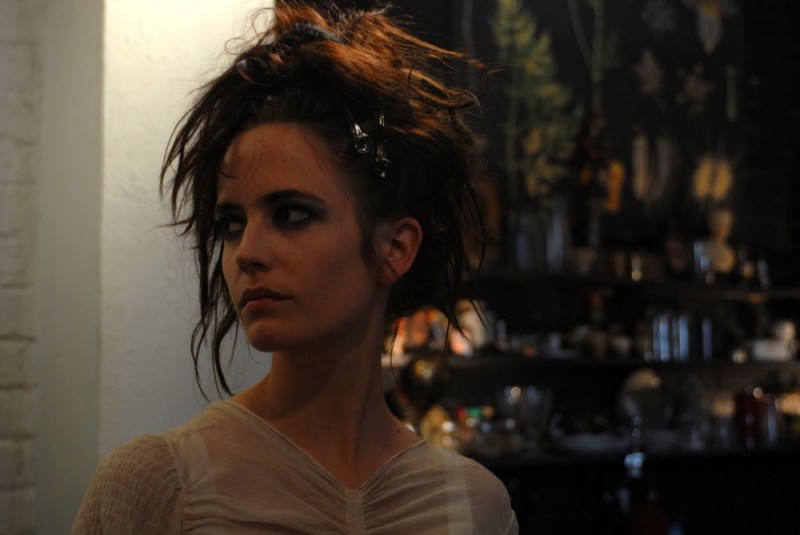
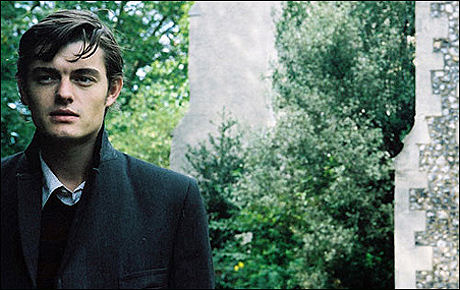
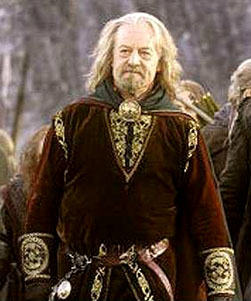
Individually the storylines are interesting enough, and McMorrow's ideas are all there. However, as bedfellows, they seem uncomfortable. The denouement as worlds collide didn't quite work in my mind, and while it was entertaining enough to try to piece together how characters overlapped between worlds, how much we were being guided to see things through certain viewpoints, it failed to live up to the emotional weight that the script tried to demand. Sadly that was the greatest weakness here: a script that verged on melodrama left the actors delivering fairly empty performances and not quite managing to lift the drama beyond the mediocre. But that remained a shame to me, a disappointment that could have been avoided with a closer edit of the material. Some of Priest's film noir style observations where in themselves amusing and a fitting homage to that genre, but why did McMorrow then choose to situate his hero in this futuristic dystopia rather than in black and white New York or Chicago? It is almost as though there are too many elements at play jarring with each other.
The dystopia is pretty enough, but maddeningly so, overladen with an intensity of detail that offers little to the plot or characters. On the one hand, reason is given as to what we are really seeing (and I'm avoiding spoilers here). But on the other, it does not inform the story to any level that is meaningful. Again, a judicious edit or rethink might have helped here. So it was a shame to watch as competent enough actors struggled through a tepid script and failed to give wings to potentially emotionally moving drama that really never got off its feet.
Am I glad I watched it? Not really. I can't go using the name Franklin much now. Boo.
~~~
2008
Ryan Phillippe, Eva Green, Sam Riley
Written and directed by Gerald McMorrow
Tyrant: Storm of Arrows
I have yet to write a review of Christian Cameron's first ancient Hellenic adventure story, Tyrant. I must say, I thoroughly enjoyed it. Cameron merges an obvious obsession with Alexandros and the ancient world of the 4th Century BC with confident storytelling and some rather epic battle sequences. But sadly, the second novel in the series falls woefully short of the mark.
Tyrant: Storm of Arrows sees our hero, Kineas, an Athenian gentleman-mercenary, where we left him in the the Chersonese. He has defended Olbia against the Macedonian army led by Phocion and fallen for the Sakje warrior princess Srayanka. He has lost comrades too, heroes from the first book. But Niceas, his trusty squire, and the Spartan Philokles remain erstwhile companions. But now trouble is brewing in the East, and the Sakje vote to send troops to assist the Sauromatae who came to their aid against the Macedonians; this time, the threat is Alexandros as he cuts an unstoppable path through the East towards Baktria.
Kineas starts to dream once more. His dreams are prophetic and he is considered a shaman by some of the Sakje. He is offered a choice: to rule Olbia as a just tyrant (if such a thing is possible, as Kineas himself doubts), or death in the East, fighting side-by-side with his love, Srayanka. He chooses the latter.
But it all goes wrong both in tone and detail. The dream sequences are barely mysterious, barely beyond step-by-step description of 'this happened, then this, then this' that are tedious enough. Alongside this, the descriptions of preparation, of travel, of conversation, also remain mundane. A secondary love interest is introduced with all the tact of a two phalanxes clashing shields; Kineas' doubts are boring, particularly given we already know the choice he has made and indeed the outcome it will offer.
It's not that Storm of Arrows claims to be a thriller and fails. It makes no such claim. But where the first book used the historical detail as a background, a further lashing of authenticity, to the action, this one is far too bogged down in it. The historical detail becomes the rambling of a pedant rather than a hook into a realistic and engaging world reimagined. It's dry and peacocked, certainly to my taste. A shame, as there are three more books due in the series.
~~~
2009
Christian Cameron
Orion Books
Tyrant: Storm of Arrows sees our hero, Kineas, an Athenian gentleman-mercenary, where we left him in the the Chersonese. He has defended Olbia against the Macedonian army led by Phocion and fallen for the Sakje warrior princess Srayanka. He has lost comrades too, heroes from the first book. But Niceas, his trusty squire, and the Spartan Philokles remain erstwhile companions. But now trouble is brewing in the East, and the Sakje vote to send troops to assist the Sauromatae who came to their aid against the Macedonians; this time, the threat is Alexandros as he cuts an unstoppable path through the East towards Baktria.
Kineas starts to dream once more. His dreams are prophetic and he is considered a shaman by some of the Sakje. He is offered a choice: to rule Olbia as a just tyrant (if such a thing is possible, as Kineas himself doubts), or death in the East, fighting side-by-side with his love, Srayanka. He chooses the latter.
But it all goes wrong both in tone and detail. The dream sequences are barely mysterious, barely beyond step-by-step description of 'this happened, then this, then this' that are tedious enough. Alongside this, the descriptions of preparation, of travel, of conversation, also remain mundane. A secondary love interest is introduced with all the tact of a two phalanxes clashing shields; Kineas' doubts are boring, particularly given we already know the choice he has made and indeed the outcome it will offer.
It's not that Storm of Arrows claims to be a thriller and fails. It makes no such claim. But where the first book used the historical detail as a background, a further lashing of authenticity, to the action, this one is far too bogged down in it. The historical detail becomes the rambling of a pedant rather than a hook into a realistic and engaging world reimagined. It's dry and peacocked, certainly to my taste. A shame, as there are three more books due in the series.
~~~
2009
Christian Cameron
Orion Books
Saturday, 20 February 2010
Philadelphia
Why oh why, I tweeted, have I not heard about or thought about or considered Philadelphia before now? Surely this is one of the most moving and meaningful films about homosexuality, about aids, about justice and humanity of the 90s, if not ever? That's certainly a touch of what I thought as I brushed away my tears. Maybe I am just a sucker for a schmalzy flick, and maybe I was tired and touched by a clearly moving story, but I was just a little bit hit in the chest by this one (See also Transamerica, for instance).
Andrew Beckett (Tom Hanks) is a high flying lawyer until his position is unexpectedly terminated, nominally over a lost file, but in actuality because he is beginning to show signs of suffering from aids. He hires Joe Miller (Denzel Washington), a public prosecutor, to fight his case, and so the two lawyers go up against one of the most powerful companies in Philadelphia in the hope that they might win compensation for Beckett's unfair dismissal. Add into the mix that Miller is a closet homophobe, and Beckett's health is deteriorating at a shocking rate, and you have the right elements of drama to make a straight courtroom film a thrill to watch.
Beckett's physical transformation is startling. He goes from a full head of hair to shaven scalp, from slim to unhealthily skinny. His eyes begin to sink into his skull and his hair loses all its colour. During his time on the witness stand he nearly chokes and when asked to show the lesions on his chest, all one can do is bite one's knuckles in distress. So as victory in the case seems to march ever closer, the bittersweet taste becomes ever more evident. Miller's clinical legality shifts to personal involvement as he realises that his client cares for justice more than financial success. He moves from grudging respect to all-out concern for Beckett and his family. But all of this subtly, softly, in the smoothest of strokes, and accompanied by a beautiful score and soundtrack and great footage of Philly.
Recommended so highly. This film speaks volumes about the suffering of aids victims, of injustice and the meaning of the word disability, while also being gripping and ever so moving.
~~~
1993
Tom Hanks, Denzel Washington, Jason Robbards, Antonio Banderas
dir. Jonathan Demme
Andrew Beckett (Tom Hanks) is a high flying lawyer until his position is unexpectedly terminated, nominally over a lost file, but in actuality because he is beginning to show signs of suffering from aids. He hires Joe Miller (Denzel Washington), a public prosecutor, to fight his case, and so the two lawyers go up against one of the most powerful companies in Philadelphia in the hope that they might win compensation for Beckett's unfair dismissal. Add into the mix that Miller is a closet homophobe, and Beckett's health is deteriorating at a shocking rate, and you have the right elements of drama to make a straight courtroom film a thrill to watch.
Beckett's physical transformation is startling. He goes from a full head of hair to shaven scalp, from slim to unhealthily skinny. His eyes begin to sink into his skull and his hair loses all its colour. During his time on the witness stand he nearly chokes and when asked to show the lesions on his chest, all one can do is bite one's knuckles in distress. So as victory in the case seems to march ever closer, the bittersweet taste becomes ever more evident. Miller's clinical legality shifts to personal involvement as he realises that his client cares for justice more than financial success. He moves from grudging respect to all-out concern for Beckett and his family. But all of this subtly, softly, in the smoothest of strokes, and accompanied by a beautiful score and soundtrack and great footage of Philly.


Recommended so highly. This film speaks volumes about the suffering of aids victims, of injustice and the meaning of the word disability, while also being gripping and ever so moving.
~~~
1993
Tom Hanks, Denzel Washington, Jason Robbards, Antonio Banderas
dir. Jonathan Demme
A Single Man
A return to more reasonable, rewarding cinema, after the japery of the last few films. Tom Ford's A Single Man charts a long day in the life of George (Colin Firth), an English professor at a Californian university coping with the death of his partner of sixteen years, Jim (Matthew Goode). Over the course of that single day, we watch as George moves between the present and the past as the smallest of details cause him to reflect on the variety his life has seen.
Reviews have swooped upon Ford's experience as a fashion designer as instrumental in the style and colour of this film; certainly there is something to be said of the picturesque nature of the footage throughout. But that any frame could be used as a still is not in itself a valid criticism. Indeed, one of the precepts of French cinema throughout the twentieth century has been to consider each shot as a work of art in itself. Ford treats his material the same, to dazzling effect. His use of colour and angle is a marvel to behold, and how that ties to the central drama of the story, amplified by a delightful score, is rather special. But I couldn't help feeling like perhaps it was a touch too much, a touch too obvious. At times the colouration of scenes was so vivid as to be strangely unnerving and perhaps unwarranted.
For a story in which very little, and yet everything, happens, the outstanding remains in the performances of Colin Firth and Julianne Moore. Her Charley, George's one-time flame, was at all times beautiful, but touched by such a large splash of tragedy as to be a truly involving character. The most scintillating and amusing moments of the film rested in their interactions, where tender feeling would segue into horsey British laughter seamlessly. The film took off at these points.
What of the homosexuality and the beauty in small things? Well, what of it? There was the suggestion that Ford might use Kenny (Nicholas Hoult) as a beautiful, youthful substitute for Jim. I feared that might be the central message of the piece: Don't fret, you can find a replacement for lost love. So the ending was all the more fitting and kept the film just clear of nauseating commentary on what really needs a far more nuanced touch. Perhaps that was the most enduring feeling for me throughout: while the performances sparkled, while there was so much manipulation in colour and tone, the emotional weight resting behind the film was negligible. A good ending saved the film from cliche, but it was perhaps a heavy hand that tried to disguise itself with beauty as a light touch...
Not a failure, and a joy to watch, and moving and wry. As a directorial debut, one might hope for even greater things from Ford in the future.
~~~
2010
Colin Firth, Julianne Moore, Matthew Goode, Nicholas Hoult
dir. Tom Ford
Based on the novel by Christopher Isherwood


Reviews have swooped upon Ford's experience as a fashion designer as instrumental in the style and colour of this film; certainly there is something to be said of the picturesque nature of the footage throughout. But that any frame could be used as a still is not in itself a valid criticism. Indeed, one of the precepts of French cinema throughout the twentieth century has been to consider each shot as a work of art in itself. Ford treats his material the same, to dazzling effect. His use of colour and angle is a marvel to behold, and how that ties to the central drama of the story, amplified by a delightful score, is rather special. But I couldn't help feeling like perhaps it was a touch too much, a touch too obvious. At times the colouration of scenes was so vivid as to be strangely unnerving and perhaps unwarranted.
For a story in which very little, and yet everything, happens, the outstanding remains in the performances of Colin Firth and Julianne Moore. Her Charley, George's one-time flame, was at all times beautiful, but touched by such a large splash of tragedy as to be a truly involving character. The most scintillating and amusing moments of the film rested in their interactions, where tender feeling would segue into horsey British laughter seamlessly. The film took off at these points.

What of the homosexuality and the beauty in small things? Well, what of it? There was the suggestion that Ford might use Kenny (Nicholas Hoult) as a beautiful, youthful substitute for Jim. I feared that might be the central message of the piece: Don't fret, you can find a replacement for lost love. So the ending was all the more fitting and kept the film just clear of nauseating commentary on what really needs a far more nuanced touch. Perhaps that was the most enduring feeling for me throughout: while the performances sparkled, while there was so much manipulation in colour and tone, the emotional weight resting behind the film was negligible. A good ending saved the film from cliche, but it was perhaps a heavy hand that tried to disguise itself with beauty as a light touch...

Not a failure, and a joy to watch, and moving and wry. As a directorial debut, one might hope for even greater things from Ford in the future.
~~~
2010
Colin Firth, Julianne Moore, Matthew Goode, Nicholas Hoult
dir. Tom Ford
Based on the novel by Christopher Isherwood
Wednesday, 17 February 2010
Sherlock Holmes
One needs to be a touch careful with films that delay their release date by a few months. Certainly it's possible that things get delayed post-production or mid-production, and one can't always plan for every hazard Fate might throw up. But having the posters and trailers advertise a date in October, only to push the film back two months smacks of some kind of serious mess-up. It was with this apprehension in mind that I trundled off to see Guy Ritchie's Sherlock Holmes on the big screen.
I must say I was quietly impressed. Holmes (Downie Jr) and Watson (Law) cut a fine pair, and the writers had clearly plugged into some of Dr. Watson's back story as evinced in so many of Conan Doyle's stories to ensure he wasn't another moustachioed bumbling sidekick. His powers of detection and deduction were nearly on a par with Sherlock's. Nearly.
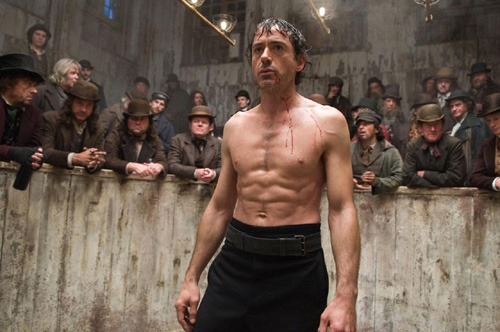
The deductive and observatory were in evidence throughout. From slow-motion cut-aways where Holmes explains to the audience his plan of attack in a given fight scene (and I can't resist dropping in a shot from one such fight here), to his pacing and deliberation, at every stage we are led to believe that Holmes' mind is ticking away non-stop. This is only heightened by the plot, in which it seems a devil-worshipping psycho really has the power of magic or spirits or some such on his side, and he's employing it to vicious effect across London. It's only in the final denouement that we get to hear Sherlock's alternative reasoning. Perfectly timed to crush any expectations we might have created throughout the film.
Irene Adler (Rachel McAdams) makes an appearance too, as the only woman to hold Holmes' attention for any length of time. She's a sneak-thief, and matches Holmes' deduction and lust with deception and connivery. It's a great on-screen relationship, playful and thrilling, and McAdams does herself justice, and stumbles through her accent just about.
This film just about ticked the right boxes. There was never a dull moment, and Holmes and Watson were a playful and engaging pair. The story ticked along at a rate of knots, and even the over-blown effects and tomfoolery didn't dent my enjoyment. All in all, fun. No great picture, no masterpiece. But no offence to Arthur Conan Doyle's greatest creation either.
I must say I was quietly impressed. Holmes (Downie Jr) and Watson (Law) cut a fine pair, and the writers had clearly plugged into some of Dr. Watson's back story as evinced in so many of Conan Doyle's stories to ensure he wasn't another moustachioed bumbling sidekick. His powers of detection and deduction were nearly on a par with Sherlock's. Nearly.


The deductive and observatory were in evidence throughout. From slow-motion cut-aways where Holmes explains to the audience his plan of attack in a given fight scene (and I can't resist dropping in a shot from one such fight here), to his pacing and deliberation, at every stage we are led to believe that Holmes' mind is ticking away non-stop. This is only heightened by the plot, in which it seems a devil-worshipping psycho really has the power of magic or spirits or some such on his side, and he's employing it to vicious effect across London. It's only in the final denouement that we get to hear Sherlock's alternative reasoning. Perfectly timed to crush any expectations we might have created throughout the film.
Irene Adler (Rachel McAdams) makes an appearance too, as the only woman to hold Holmes' attention for any length of time. She's a sneak-thief, and matches Holmes' deduction and lust with deception and connivery. It's a great on-screen relationship, playful and thrilling, and McAdams does herself justice, and stumbles through her accent just about.

This film just about ticked the right boxes. There was never a dull moment, and Holmes and Watson were a playful and engaging pair. The story ticked along at a rate of knots, and even the over-blown effects and tomfoolery didn't dent my enjoyment. All in all, fun. No great picture, no masterpiece. But no offence to Arthur Conan Doyle's greatest creation either.
~~~
2009
Robert Downie Jr, Jude Law, Rachel McAdams
dir. Guy Ritchie
Subscribe to:
Posts (Atom)