Showing posts with label fantasy. Show all posts

Wednesday, 8 September 2010

The 13th Warrior

I hesitated before posting this up, partly because I have so little to say about the film and partly because it's just not very good.

Banderas plays Ahmed Ibn Fahdlan, an Arab poet sent as diplomat to the north. He meets some Norsemen, and by a tiresome twist of fate, ends up the thirteenth warrior in a party setting out to rescue a tribe from supernatural enemies.

The film is fairly standard 90s blockbuster fare. So little attention is paid to plot, which creeps predictably onwards, while location and costume are similarly neglected. One imagines that most of the budget must have gone on getting Banderas, and maybe trying to get his English passably accented, that what remained accounted for the poor set and setpieces. It's also a prime case of a Michael Crichton novel being essentially misunderstood. After early commercial successes in adapting the bestselling author to the big screen, there were a spate of poorly made adaptations that fail to capture the essence of his writing and sufficiently translate that into a workable film. So we have a film with poorly imagined characters and dialogue, simply because the makers relies too heavily on a novel. For all novel-film cross-overs, it seems to have been proven that it is not about relying on copying the novel from page to screen, but on finding a film equivalent for many of a given novel's devices. The 13th Warrior expressly fails on that account.

Laughably bad. But not worth one's time for the laughs.

~~~
1999
Antonio Banderas, Vladimir Kulich
dir. John McTiernan

Friday, 23 July 2010

Eclipse

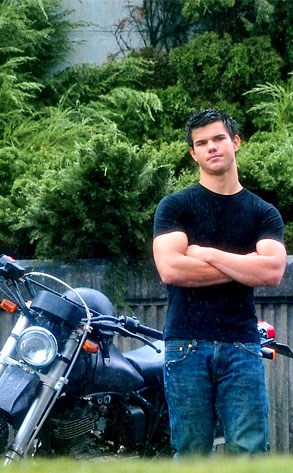
If one ever is inclined to question how important a change in director really can be on a film franchise, compare New Moon and Eclipse. The former film managed to get almost everything wrong and sorely misjudged the original charm of Twilight, while also doggedly and tediously rendering details of the text in such a way as to deprive them of any significance or charm.. The latter showed an impressive return to form and left me firmly in the belief that Twilight was in fact a great teen love story which happened to have a silly background of vampires and that that, most importantly, didn't really detract from a great movie.


For a start, despite continuing to rely on rather outrageous effects (and who wants to thank Stephanie Meyer for diamond-skinned vamps?), Eclipse manages to bumble through a hit-and-miss script that at least gives the protagonists a chance to speak their minds. Werewolf Jacob (Taylor Lautner) gives his most convincing arguments for Bella's heart, or is at least his most insistent, while she explains herself a little better than she's yet managed. Meanwhile Edward (Robert Pattinson), remarkably, pulls off a heretowith unmanaged feat and appears almost entirely sympathetic (and thankfully less sparkly). His reasons for being with Bella (Kristen Stewart), his old-fashioned values and concern for her soul, are offered in far more detail than we have seen before. He's not, for once, moany about it. He's clear and almost admirable. It's nice.


The plot flounders, but when were the Twilight films concerned with plot? There's less of the dire Volturi, and that's grand. The script, as noted, is patchy, but that means there's alternating hilariously bad, and hilariously sincere, dialogue, and why not? Since when were teens all about slick lines and pregnant pauses? The show must go on, at the end of the day, and Eclipse foreshadows a little more pregnancy to come: the bedroom scene between Bella and Edward is perhaps the most amusing scene in the film. Yet behind it lurks menace. Whoever takes up the Twilight mantle for the last book, which will be split into two films, better prepare to get as serious as Eclipse. And serious not with effects or emotional sincerity, but in giving the story a chance to flourish, and not taking itself too seriously. What teen movie does?


~~~
2010
Kristen Stewart, Robert Pattinson, Taylor Lautner
dir. David Slade

Monday, 12 April 2010

Rumo And His Miraculous Adventures

Walter Moers' books have been described as 'children's stories for adults'. Certainly they represent a fusion of childlike fantasy with fairly sophisticated wit that might more often be associated with the older reader. As such, they are a total pleasure to read. Rumo is no exception.


Set in the world of Zamonia, like the other Moers' novels, a place inhabited by anthropomorphised dinosaurs and beasts, the novel tells the story of its eponymous hero, from his birth, through to his many, as indicated in the title, miraculous adventures. Rumo is a Wolperting, half-deer, half-wolf, possessed with exceptional senses and combat abilities, razor sharp teeth and horns. From his initial capture and imprisonment, through to finding some sense of belonging in the city of Wolperting (suitably named, no?), to his quest to Netherworld, at every turn we see Rumo confronted by fearsome villains and no small dose of humour. Part of what makes the story so compelling is that while there is no lack of cynicism from the narrator, and from various sub-narrators who tell length stories explaining myths and history of Zamonia, essentially we are led both to support and care for Rumo. While the setting may be anti-heroic, while we may laugh at the absurdity of it all, yet I still found myself rooting for Rumo and hoping all would be all right in the end.


There's a host of characters to laugh at, besides. Smyke, the grandiloquent shark-grub who teaches Rumo much about fighting, along with everything else; Professor Nightingale, nocturnomath, essential both for plot development and a bit of a giggle at the 'academic' stereotype; Urshan deLucca, fencing master who's totally obsessed with the weather, and finds Netherworld, horrific as it is, an absolute delight, because it's free of atmospheric pressure and the like; the Copper Killers, alchemical robots that can't be stopped. As a work of imagination, Rumo is simply bewildering, but not at the price of engagement. Indeed, it's all consuming rather than off-putting, and one is drawn into the web of stories. As the threads come together in the denouement, I found myself nearly slapping a thigh in satisfaction; when I tried to explain to a friend what was so satisfying, I realised there were too many details to explain to make it worthwhile. I plonked the completed book in his lap instead. 


A joy to read, and mirthfully illustrated to boot.


~~~
2004
Walter Moers, translated by John Brownjohn

Thursday, 11 March 2010

Tyrant: Storm of Arrows

I have yet to write a review of Christian Cameron's first ancient Hellenic adventure story, Tyrant. I must say, I thoroughly enjoyed it. Cameron merges an obvious obsession with Alexandros and the ancient world of the 4th Century BC with confident storytelling and some rather epic battle sequences. But sadly, the second novel in the series falls woefully short of the mark.


Tyrant: Storm of Arrows sees our hero, Kineas, an Athenian gentleman-mercenary, where we left him in the the Chersonese. He has defended Olbia against the Macedonian army led by Phocion and fallen for the Sakje warrior princess Srayanka. He has lost comrades too, heroes from the first book. But Niceas, his trusty squire, and the Spartan Philokles remain erstwhile companions. But now trouble is brewing in the East, and the Sakje vote to send troops to assist the Sauromatae who came to their aid against the Macedonians; this time, the threat is Alexandros as he cuts an unstoppable path through the East towards Baktria. 


Kineas starts to dream once more. His dreams are prophetic and he is considered a shaman by some of the Sakje. He is offered a choice: to rule Olbia as a just tyrant (if such a thing is possible, as Kineas himself doubts), or death in the East, fighting side-by-side with his love, Srayanka. He chooses the latter.


But it all goes wrong both in tone and detail. The dream sequences are barely mysterious, barely beyond step-by-step description of 'this happened, then this, then this' that are tedious enough. Alongside this, the descriptions of preparation, of travel, of conversation, also remain mundane. A secondary love interest is introduced with all the tact of a two phalanxes clashing shields; Kineas' doubts are boring, particularly given we already know the choice he has made and indeed the outcome it will offer. 


It's not that Storm of Arrows claims to be a thriller and fails. It makes no such claim. But where the first book used the historical detail as a background, a further lashing of authenticity, to the action, this one is far too bogged down in it. The historical detail becomes the rambling of a pedant rather than a hook into a realistic and engaging world reimagined. It's dry and peacocked, certainly to my taste. A shame, as there are three more books due in the series.


~~~
2009
Christian Cameron
Orion Books