Showing posts with label adaptation. Show all posts

Wednesday, 29 September 2010

30 days of night

So continues a little bit of my vampire interest writing. I’ve done a couple of I Am Legend look-sees (here and here) along with more mainstream jabbering (here for example). 

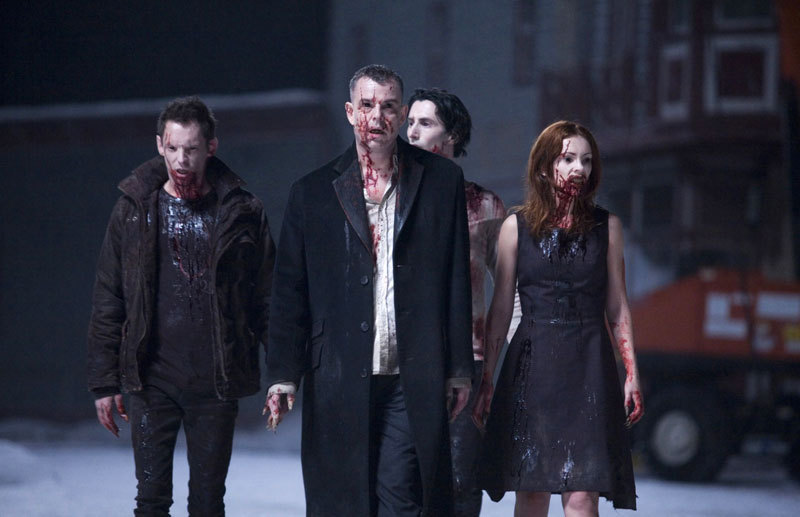
30 Days of Night was hailed as one of the darkest, goriest vampire flicks ever. Updating the blockbuster hyperbolic action of the Blade trilogy, it would usher in a return to the vampire-as-true-horror genre, rather than namby-pamby 'sexy' vampires with diamond skin and such. In the small town of Barrow, northernmost of American outposts in Alaska, a thirty-day night is just beginning, a period of darkness marked by the departure of nearly half the 1,500 inhabitants who flee to warmer, brighter climes. And into this one long night arrives a stranger (Ben Foster), and, of course, a whole bunch of very thirsty vampires.

The strained relationship between town sheriff Eben Oleson (Josh Hartnett) and his estranged wife Stella (Melissa George), who happens to find herself in Barrow just in time to miss the last flight clear, is established nicely enough. Early attempts at meaningful, emotive dialogue are pulled off just about. Night begins to fall. The first killings occur, and a sense of mystery infuses the air.

Unfortunately, that sense of mystery is not particularly engaging. The cinematic beauty of watching the sun set for the last time for an entire month, coupled with some rather nifty opening credits, is not enough to cancel out the fact that the opening drags, and ‘Day 1’ lasts almost half of the film. Once the survivors of the initial onslaught are boarded up in an attic hideout, it already seems inevitable that they will all die. The desperation, the hope and the excitement that might have been worked into fighting off a vampire siege is wholly removed. ‘Day 8’ adds little to the thrill, the next milestone we are given. Where did days 2 - 7  go? An old man, trying to break out, is carried off. Somehow the vampires, who have engineered this conquest, fail to understand that there might be other people hiding in the building. These master monsters, who've been clever enough to think of hitting up an entire town that's dark for a whole month fail really to follow through with their design.

How should one redeem such a piece? Can adding conversations between vampires, a line about how they had tired of hiding in the shadows, enhance the threat they pose? Not really. Instead, it makes the conquest of Barrow, tiny and insignificant as it portrayed to be, into some kind of battleground to protect all of America, and it doesn’t work. Heroism can be found anywhere. Why not make Eben the hero of Barrow, not of America, the world, as a whole? Why try to make this about the entire human race when the audience might want in fact to care about the people of Barrow instead. 

Rapidly descending into trite melodrama. Not dark enough to remain true vampire horror, or swiftly paced enough to add proper tension or expectation in the audience. Adding gore to a weakly carried out film doesn't rocket up into must-see lists, I'm afraid.

~~~
2007
Josh Hartnett, Melissa George
dir. David Slade

Transformers: Revenge of the Fallen


Transformers 1: all right, all told. Remarkably. Transformers 2: a minefield of atrocity. The way this film was put together was infuriatingly, insultingly bad. For a piece to lack coherence to such a degree is horrific. It’s borderline racist, sexist, ageist, and everything-ist. Horrible. It doesn’t deserve any more words.


~~~
2009
Shia LeBeouf, Megan Fox
dir. Michael Bay

Tuesday, 14 September 2010

Wonder Boys

I'm a great Michael Chabon fan. I reckon he can't really set a word wrong, all told. The Amazing Adventures of Kavalier & Clay and Summerland are both books that really deserve glowing write-ups here (I read them both after this blog began). But I'd not come across Wonder Boys, an early outing of his, and I didn't know it had been adapted to the screen. Imagine my surprise to discover not only that there's a film adaptation, but it features Michael Douglas, Robert Downey Jr, Tobey Maguire and Katie Holmes. They're popular names, if nothing else.

Wonder Boys traces a few days in the life of Prof. Grady Trip (Douglas). He's had that first break-through novel, which has earned him an esteemed, if low-key, position in the great American canon. Now he's teaching creative writing, but he's in a rut. Just as his editor, Crabtree (Downey Jr), comes to visit he discovers a gifted student, James Leer (Maguire). So begins a journey of discovery for professor and student, as the tangled webs of their lives are slowly unpicked. Of course, it helps that Leer's creative talent might stem from a compulsive desire to lie. Fabrication seems to have penetrated every aspect of his life.

This is a remarkably well-observed drama. The dialogue is at times too obvious, and tends towards cliche, but never quite grates, and it's skilfully enough put together that the personalities of the film (Douglas, Maguire) are comfortably negated, or at least softened. It's easy with such big players to expect certain tropes or kinds of performance. But the eccentricities of some (Downey Jr) are underplayed, even if other characters (McDormand in particular, as the long-suffering dean and sometime lover of Douglas), are not really given an opportunity to shine.

It is, in the final analysis, a very American film. It's saturated in questions of creation and discovery, and funny and moving at the right times, without quite taking itself above and beyond the ordinary. It has traces of Chabon's excellence, and one can detect echoes of his emotional charged writing in scenes that never quite soar to the heights they should. But it works, all the same, and remains enjoyable.

~~~
2000
Michael Douglas, Robert Downey Jr., Tobey Maguire, Frances McDormand, Katie Holmes
dir. Curtis Hanson

Wednesday, 8 September 2010

The 13th Warrior

I hesitated before posting this up, partly because I have so little to say about the film and partly because it's just not very good.

Banderas plays Ahmed Ibn Fahdlan, an Arab poet sent as diplomat to the north. He meets some Norsemen, and by a tiresome twist of fate, ends up the thirteenth warrior in a party setting out to rescue a tribe from supernatural enemies.

The film is fairly standard 90s blockbuster fare. So little attention is paid to plot, which creeps predictably onwards, while location and costume are similarly neglected. One imagines that most of the budget must have gone on getting Banderas, and maybe trying to get his English passably accented, that what remained accounted for the poor set and setpieces. It's also a prime case of a Michael Crichton novel being essentially misunderstood. After early commercial successes in adapting the bestselling author to the big screen, there were a spate of poorly made adaptations that fail to capture the essence of his writing and sufficiently translate that into a workable film. So we have a film with poorly imagined characters and dialogue, simply because the makers relies too heavily on a novel. For all novel-film cross-overs, it seems to have been proven that it is not about relying on copying the novel from page to screen, but on finding a film equivalent for many of a given novel's devices. The 13th Warrior expressly fails on that account.

Laughably bad. But not worth one's time for the laughs.

~~~
1999
Antonio Banderas, Vladimir Kulich
dir. John McTiernan

Friday, 23 July 2010

Eclipse

If one ever is inclined to question how important a change in director really can be on a film franchise, compare New Moon and Eclipse. The former film managed to get almost everything wrong and sorely misjudged the original charm of Twilight, while also doggedly and tediously rendering details of the text in such a way as to deprive them of any significance or charm.. The latter showed an impressive return to form and left me firmly in the belief that Twilight was in fact a great teen love story which happened to have a silly background of vampires and that that, most importantly, didn't really detract from a great movie.


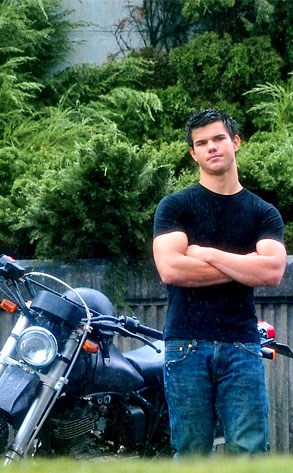
For a start, despite continuing to rely on rather outrageous effects (and who wants to thank Stephanie Meyer for diamond-skinned vamps?), Eclipse manages to bumble through a hit-and-miss script that at least gives the protagonists a chance to speak their minds. Werewolf Jacob (Taylor Lautner) gives his most convincing arguments for Bella's heart, or is at least his most insistent, while she explains herself a little better than she's yet managed. Meanwhile Edward (Robert Pattinson), remarkably, pulls off a heretowith unmanaged feat and appears almost entirely sympathetic (and thankfully less sparkly). His reasons for being with Bella (Kristen Stewart), his old-fashioned values and concern for her soul, are offered in far more detail than we have seen before. He's not, for once, moany about it. He's clear and almost admirable. It's nice.


The plot flounders, but when were the Twilight films concerned with plot? There's less of the dire Volturi, and that's grand. The script, as noted, is patchy, but that means there's alternating hilariously bad, and hilariously sincere, dialogue, and why not? Since when were teens all about slick lines and pregnant pauses? The show must go on, at the end of the day, and Eclipse foreshadows a little more pregnancy to come: the bedroom scene between Bella and Edward is perhaps the most amusing scene in the film. Yet behind it lurks menace. Whoever takes up the Twilight mantle for the last book, which will be split into two films, better prepare to get as serious as Eclipse. And serious not with effects or emotional sincerity, but in giving the story a chance to flourish, and not taking itself too seriously. What teen movie does?


~~~
2010
Kristen Stewart, Robert Pattinson, Taylor Lautner
dir. David Slade

Saturday, 13 March 2010

The Magnificent Seven

Over the last ten years, 'remake' has become a bit of a buzzword for cashing in on a franchise for a quick blockbuster buck. Consider Rambo as an example: it widely missed the mark of what made the first film excellent; it misjudged what it was to revive an idea and a character. Not so with The Magnificent Seven.  In fact a film like this one is probably a contributing factor as to why remakes are even palatable at all: it essentially understands its subject matter and story (Kurosawa's 1954 Shichinin no samurai - Seven Samurai) but in transporting it to a new setting and reviving the characters it adds and develops plot, flavour and meaning in a vibrant and effective manner.


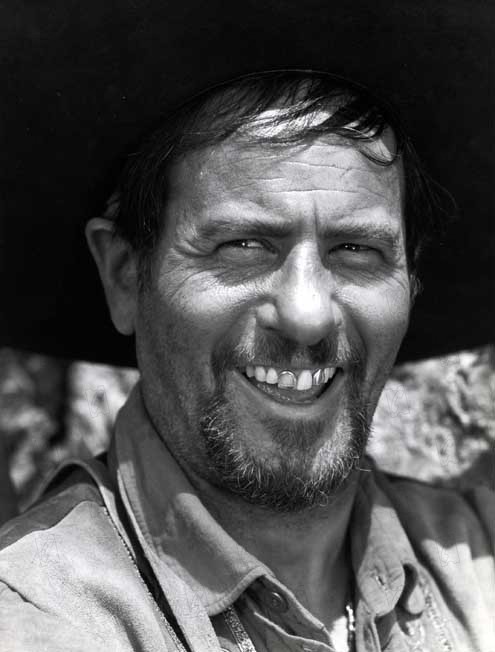
The plot is straightforward enough. A small village is plagued by bandits, led by the vicious yet charismatic Calvera (Wallach who went on to star in The Good, The Bad and the Ugly); in desperation the villagers set out to buy guns to defend themselves and instead stumble upon Chris and Vin (Brynner and McQueen respectively) who take on their case, despite the lack of money. Between the two of them they convince other acquaintances, either through pressing their honour or with the lure of some secret wealth, to join them. 


Upon arrival in the village, they are not given quite the heroes' reception they hoped for. After a series of skirmishes with Calvera's men they are ambushed and forced out of the village. But, with nothing more than honour at stake, the seven return to rescue the village in a final, last-ditch attempt. 


The performances are sensational. Each of the seven are well-drawn enough that even with brief screen appearances a sense of character emerges that engages instantly. Particularly likeable are O'Reilly (Bronson) and Britt (Coburn), both taciturn characters clearly admired for their abilities. O'Reilly's first scene is machismo incarnate, while Britt's cool reserve perfectly matches his counterpart from Seven Samurai, and similarly masks a deadly killing potential. Chico (Horst Buchholz), the young, impetuous seventh, also shines. He's headstrong and moody, but pulls it off and gives us just enough of a chance to see the fear behind his posturing that he's an eminently likeable, if childish, hero.  


Couple that with a lively score, a great sense of dramatic pacing (no lengthy meaningful pauses here) and enough plot elements to keep things sharp, and it's easy to see why The Magnificent Seven holds a position of such gravitas in the cannon not only of westerns, but of remakes. Justly so. It's the sort of film that makes one want to look up every other Bronson or Coburn film, just to marvel at their abilities.


~~~
1960
Val Brynner, Steve McQueen, Eli Wallach, Charles Bronson, Robert Vaughn, Brad Dexter, James Coburn and introducing Horst Buchholz
dir. John Sturges

Wednesday, 17 February 2010

Sherlock Holmes

One needs to be a touch careful with films that delay their release date by a few months. Certainly it's possible that things get delayed post-production or mid-production, and one can't always plan for every hazard Fate might throw up. But having the posters and trailers advertise a date in October, only to push the film back two months smacks of some kind of serious mess-up. It was with this apprehension in mind that I trundled off to see Guy Ritchie's Sherlock Holmes on the big screen.


I must say I was quietly impressed. Holmes (Downie Jr) and Watson (Law) cut a fine pair, and the writers had clearly plugged into some of Dr. Watson's back story as evinced in so many of Conan Doyle's stories to ensure he wasn't another moustachioed bumbling sidekick. His powers of detection and deduction were nearly on a par with Sherlock's. Nearly. 


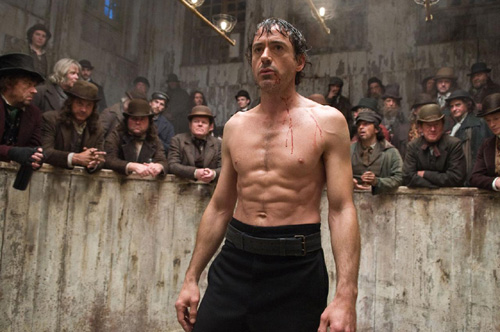
The deductive and observatory were in evidence throughout. From slow-motion cut-aways where Holmes explains to the audience his plan of attack in a given fight scene (and I can't resist dropping in a shot from one such fight here), to his pacing and deliberation, at every stage we are led to believe that Holmes' mind is ticking away non-stop. This is only heightened by the plot, in which it seems a devil-worshipping psycho really has the power of magic or spirits or some such on his side, and he's employing it to vicious effect across London. It's only in the final denouement that we get to hear Sherlock's alternative reasoning. Perfectly timed to crush any expectations we might have created throughout the film. 


Irene Adler (Rachel McAdams) makes an appearance too, as the only woman to hold Holmes' attention for any length of time. She's a sneak-thief, and matches Holmes' deduction and lust with deception and connivery. It's a great on-screen relationship, playful and thrilling, and McAdams does herself justice, and stumbles through her accent just about. 


This film just about ticked the right boxes. There was never a dull moment, and Holmes and Watson were a playful and engaging pair. The story ticked along at a rate of knots, and even the over-blown effects and tomfoolery didn't dent my enjoyment. All in all, fun. No great picture, no masterpiece. But no offence to Arthur Conan Doyle's greatest creation either.


~~~
2009
Robert Downie Jr, Jude Law, Rachel McAdams
dir. Guy Ritchie

X-Men Origins: Wolverine

Gosh. This'll be short and anything but sweet. It's making me grin just thinking about this train-wreck of a film, that I had even mentioned to a couple of people about how I only seemed to review things that I thought had some aspect that was absolutely excellent, and asked whether I should watch more dross to compensate, to get a bit of variety in my reviewing. And I have to repeat gosh because I probably have more to say about what I didn't like about this than anything else.


It just seemed so very wrong. So repeatedly wrong. Every attempt to make some kind of gesture to the fans, as with the inclusion of Remy LeBeau (Taylor Kitsch) or the young Cyclops, just seemed to falter. Storyline barely existed, while dialogue and performances were stilted at best. Wolverine himself (Hugh Jackman) looked at though he might have dosed up mightily on painkillers just to get through his own performance. Flat and dead behind the eyes is probably being a bit kind. I cared nothing for these folks. I didn't want to care. I just wanted them to go away.


I suppose the tragedy of all of this is that I am a long time X-Men fan. More than just a comic book fan, I also thought Bryan Singer's offerings were passable, if not fairly excellent, as attempts at the early stage of comic book adaptation for the 21st century. X-Men 3 was woefully bad, but still seems to hang together all right in my memory in comparison to this turgid piece of... can I call it cinema? Who would this film even appeal to? It was thoroughly lifeless.


~~~
2009
Hugh Jackman, Taylor Kitsch, Liev Schreiber, Danny Huston
dir. Gavin Hood

Wednesday, 10 February 2010

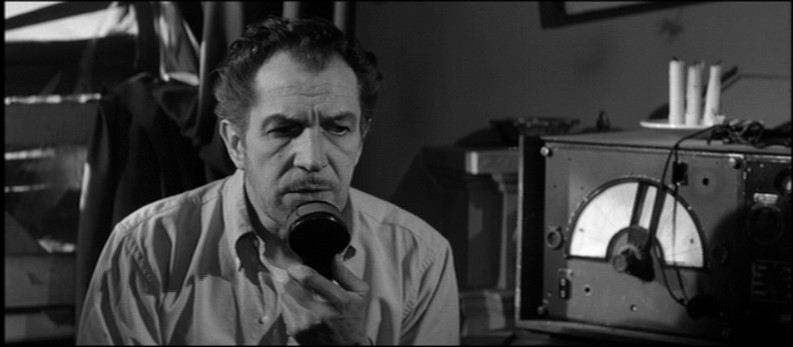
The Last Man On Earth

I've gone about all this wrong, I thought, as I tuned in to watch the first adaptation of Richard Matheson's I Am Legend after both The Omega Man (reviewed here) and I Am Legend (with Will Smith). But, in actual fact, I think I might have gone about things the right way.


For starters, The Last Man On Earth stays faithful to a far greater degree to Matheson's novella than either of the later adaptations. Gone is the slick stylisation of The Omega Man or the transplantation to New York of Lawrence's 2007 hit. Instead, we have the same run-down home described in the book, and the same kind of man: a family man, with remembered friends and memories, with science as his gospel, and with a curious immunity to the virus that plagues the rest of the world. Here too we have some of the greatest accuracy to the book's plot: a new breed of 'vampire' that is organising society anew; spies sent to draw out Robert (who strangely is Morgan, not Neville, in The Last Man, a strange, unnecessary deviation in my view); Robert's own interest in science and introspection. The film even ends in the same way as the book.


So this was very much the climax of the trilogy for me, even though I came to it last, and should perhaps have reached it first. Price's Robert is brooding and pained at all turns (check out those eyebrows and the lines on his head), and very much aware of his own sickening isolation. This is brought about in part by his voice-overs, so succinct and curious, yet echoing in silence, and in part by a score that, like any good black and white film, mirrors the action on screen. It certainly seemed dated now, but worked very well with the material offered up. 


That was, to my eye, the one weakness of the film: for a paltry 86 minutes it felt a lot longer, and it struggled to keep my attention very effectively. But that surely says more about me as a film watcher than about the film, or at least a little about both of us. The adaptation was as close as I'd want it to be to the novel, and yet that wasn't enough for it to be truly engaging for me. 


Definitely worth a look in for any fans of I Am Legend or The Omega Man, but not quite the cinema gem it could be. I wish I could put my finger on why not...


~~~
1964


Vincent Price, Franca Bettoia, Emma Danieli


dir. Ubaldo Ragona & Sidney Salkow (depending on whether one watches the Italian prints)

Tuesday, 5 January 2010

Where The Wild Things Are

Spike Jonze's spirited screen interpretation of Maurice Sendak's childhood masterpiece Where The Wild Things Are pulls no punches in taking the essential message of the book and transferring that successfully to the silver screen.

The challenge with Sendak's story is that its short, only some twenty pages, and filled with imagination and adventure. The latter actually lends it to screen adaptation, where Jonze decided to flesh out the 'wild rumpus' between Max and the Wild Things with all sorts of sequences of frivolity and violence. In addition, the whole idea of all collapsing in a heap together to sleep is beautifully handled, as the Wild Things do just that.

But it's not all book-to-screen transposition in the film. Firstly, Jonze had to flesh out some of the characters. Max is obviously given a much deeper portrayal (wonderfully played by Max Records), with a rather touching back story of familial strife and loneliness, explaining his bad behaviour. Meanwhile, the Wild Things are given names and voiced by an impressively diverse cast (James Gandolfini, Paul Dano, Forest Whitaker, Catherine O'Hara, Lauren Ambrose, Chris Cooper and Michael Berry Jr.; Gandolfini is particularly impressive as the passionate Carol). I had never before wondered what the voices of the Wild Things would be like, but was completely taken in by this choice of Jonze's, making them seem ever so americana and ordinary, as figments of adults as Max might imagine them, completely down to mundane names and normal voices.

Secondly, the score and cinematography both deserve note; the film is so colourful and epic in scope, with rapidly changing scenery and music that both compliments and enhances the drama that it's easy to feel swept away into the thrill of the events and feel as though one is escaping into this other world imaginary realm. And like the book, there's never a moment where it's stated "and this was all a dream". Indeed, that's another of the film's strengths: it added and expanded on the story, while never needing to contradict or explain away other details. The child-voiced choir directed by Karen O of the Yeah Yeah Yeahs is a beautiful touch and does not challenge anything we already knew from the novel.

Finally, the expansion work Jonze has undertaken is shown in the themes of the story. We have a story about a boy fleeing to an imaginary world in which he can get away with anything and is ruler of the roost. In doing so, he begins to miss his family and appreciates the challenges of being a grown-up or the one in control. This is perfectly captured by the film, but also nuanced; there's a broken home that Max escapes, and the challenges of leading the Wild Things are far from straightforward, with a real threat of danger that comes across and adds a chill to much of the drama that occurs between the Wild Things and Max. He's an imperfect hero, and he begins to appreciate those imperfections as the story unfolds, to his benefit.

Utterly engaging and enjoyable.

~~~
2009

Max Record, Catherine Keener, James Gandolfini, Paul Dano, Lauren Ambrose, Catherine O'Hara, Forest Whitaker, Michael Berry Jr, Chris Cooper

dir. Spike Jonze

Sunday, 29 November 2009

The Omega Man

I read I Am Legend a little late; it has been reckoned by some as the single most important vampire novel after Bram Stoker's Dracula. Richard Matheson's novella is chilling in its portrait of the conflict a lone man faces after the world is swept by a plague; not only do the blood-sucking humans now wish to kill him, but every day is a battle with his own conscience as he searches for a cure to the virus and tries to overcome the desire to end it all.

Francis Lawrence's I Am Legend (2007) drew upon that aspect of loneliness, of a single man alone against the world. But in my view some of the charm of the book was lost as he transferred the setting from the West Coast to urban New York and turned the vampires into little more than mindless creatures. Will Smith's performance as Robert Neville was admirable, but not remarkable.

The Omega Man is the attempt of a different decade to put I Am Legend on the screen. Charlton Heston stars as Robert Neville, but here Boris Sagal has stayed more closely to the plot of the novel, in some aspects; we get a glimpse of the organisation and intention of the vampires (even if bloodsucking is not really mentioned at all; perhaps that's for the best, avoiding the standard vampire tropes that seem to abound); Neville's isolation is similarly emphasised, and more than once we see his inability to relate to others after his long silence has left him talking to himself and playing games with himself. The drinking is there too and the empty rage at his impotence.

The plot does differ from the novella; in exactly the same way as the later film, the film-makers have decided a love interest is necessary. Certainly, there is an interest in the book; but that interest is central to the plot and continues a strong message about the risk of love. In both films, the love interest only serves to further the bravery of Neville but also tie him down. There's no risk involved to himself except by the sacrifices he chooses to make for a woman.

Cinematographically, The Omega Man is beautifully realised. The desolation and ruinous husks of buildings that surround Heston as he runs around hunting the vampires are striking and intensify that sense of loneliness. The score is also a highlight, as it sets the tone perfectly. A key shift as Neville enters a darkened building and the hairs stood up on the back of neck in anticipation for discovering one of the 'Family'. Heston's performance is strong as well.

But it's badly structured plot and poor performances from the rest of the cast that let the film down. The dialogue between Heston and the love interest Lisa (Rosalind Cash) is stilted and the children he finds are wooden at best. It's entirely frustrating because the dynamism and anticipation that has been built earlier in the film falls flat. There is no sense of a climax. In fact, because the plot has been transposed somewhat, what should be a final set-piece occurs half-way through the film, entirely robbing the ending of anything with as near as brutal as the original's final moments. It's not that this is a poor adaptation of a book; it's not. It's that in making an adaptation some choices and some performances let the side down too much for it to be entirely enjoyable.

***
1971

Charlton Heston, Rosalind Cash, Anthony Zerbe

dir. Boris Sagal

Thursday, 12 November 2009

High Fidelity

Where did I get so confused? Wait...that's the codeine talking.

I don't think I was that thrown by High Fidelity. On the one hand, I could understand why a caring friend gave it to me on discovering I was newly single: it's a film about break-ups, and the way in which a change in relationship status might force one to re-evaluate all that's gone before. On the other, did I really want to weep over the spilt milk of a failed escapade when in fact I should be celebrating my new opportunities and shot at being happy? Is it worth dwelling on that which we can't change?

According to Rob Gordon (John Cusack), it is. The only way forward is to tear back through the past, throwing up questions and answers in equal measure about his suitable as a mate and inevitably hitting that age old stumbling block: "Will I always be alone?". The girl in question that's left him is Laura (Iben Hjejle), and while we don't get an immediate insight into what went wrong, in turns we do discover that in all probability, both of them have acted badly and pissed on their relationship in their own searches for happiness (whether that's through job satisfaction, other partners or just trashing what they know to be 'good').

Rob's erstwhile companions and poor comforters are Dick (Todd Louiso) and Barry (Jack Black), once part-time employees at his Championship Vinyl record store, now full-time loafers and music geeks extraordinaire. One wonders if their dialogue, at times self-mocking in its propensity for pedantry, was in fact the writers' own musical snobbery expressed in ironic terms. Then again, it could just have been marvellously well-observed.

The strength of the film lines both in these two secondary characters, the humour that they provide, and the fact that Rob's internal monologue (delivered throughout directly to the camera by Cusack), while at times pained, never really takes itself too seriously. That's the real clincher: actually to believe what Rob is saying is to accept that by twenty-six you really do need to be settling down. Of course that's not the case, and it struck me as a remarkably dated attitude. In addition, Rob's own lack of insight into his affairs suggested that we should not take everything our narrator says as gospel.

The only really irksome detail of the film was the ending. A reunion between Rob and Laura, while unwished for, was to be expected, but the circumstances surrounding it are decidedly morbid and pathetic. The suggestion was that they wouldn't find anyone better, so may as well settle for just 'ok'. But while in Brief Encounter that might be plausible, and indeed laudable, as settling for family is both a noble and loyal decision, here there is no nobility to their actions. In fact, it just seems that they are giving up; Rob's realisation that the other women he has eyes for are merely fantasies does not come across as something momentous. Rather, it appears to be a disappointment; the bubble has burst and he is accepting that life won't get better than Laura. Perhaps he's right; perhaps he has come to a conclusion that might be right for him; but it was not a decision he made that inspired any confidence in the viewer, especially having seen him moan and mope in the pouring Chicago rain.

A disappointing ending to an otherwise enjoyable film.

***
2000

John Cusack, Iben Hjejle, Todd Louiso, Jack Black

dir. Stephen Frears

based on the book by Nick Hornby