Showing posts with label action. Show all posts

Wednesday, 29 September 2010

Daybreakers

Daybreakers takes the premise that after the emergence of the vampire strain, all was conquered swiftly in its path. Humans now exist in the minority, hunted for their tasty blood and shying away from cities which now have underground tunnel networks to allow vampires to get around even by day. 

Ten years on, by a rather crafty series of news bulletins, mini-scenes and overheard snatches of conversation, we discover human blood may be drying up. Humans may in fact be going extinct. Blood deprived vamps, the poorest of the poor, are mutating into monsters, while blood investors start withdrawing their human capital to save the blood for themselves. And in the centre of the mess stands chief haematologist Edward Dalton (Ethan Hawke), an unwilling vampire at best, and  certainly a humanity sympathiser (even if he's embraced the vampire look pretty slickly). 

Hawke's performance is perfectly fine. He scowls a lot and looks pasty. He's entirely outdone by the delicious Audrey (Claudia Karvan, who must have been sexed up so that the audience might feel a fraction of Dalton's own longing for her blood) and even more so by a star turn from Defoe, who plays the hicky-gung-ho Lionel 'Elvis' Cormac, leader of the human resistance. (Why wouldn't I use that image again? Look at Defoe's expression!) It's an entertaining, absurd performance and Defoe shines, southern drawl and all. He's a consummate performer who demands attention throughout, and his intensity and slightly crazed leer match his character's perfectly. 

Meanwhile, plot and design complement each other comfortably. Despite a lamentably obvious human-capture setpiece, the supporting characters are used to full effect and the story trots along merrily and enjoyably. There are a couple of needlessly gory deaths; but there is also enough blood and madness around for it almost to make sense, especially given the well-told background of riots and vamps losing their nerve. After all, in a world that's running short on blood, any time there is bloodletting, there's that tinge of useless waste underlying my usual gut reaction of 'oh needless gore'. It's a subtle detail, but it pleased me some. 

I had expected something along the lines of Blade 3 - action, laser bows, idiocy. Instead I got a rather terser, tighter piece, filled with energy and engaging detail. It wasn't the most sophisticated film ever, but I'd watch it again to catch all the details I missed, and first time through, it was a joy to watch.

~~~
2009
Ethan Hawke, Claudia Karvan, Willem Defoe, Sam Neill
dir. Michael Spierig, Peter Spierig

30 days of night

So continues a little bit of my vampire interest writing. I’ve done a couple of I Am Legend look-sees (here and here) along with more mainstream jabbering (here for example). 

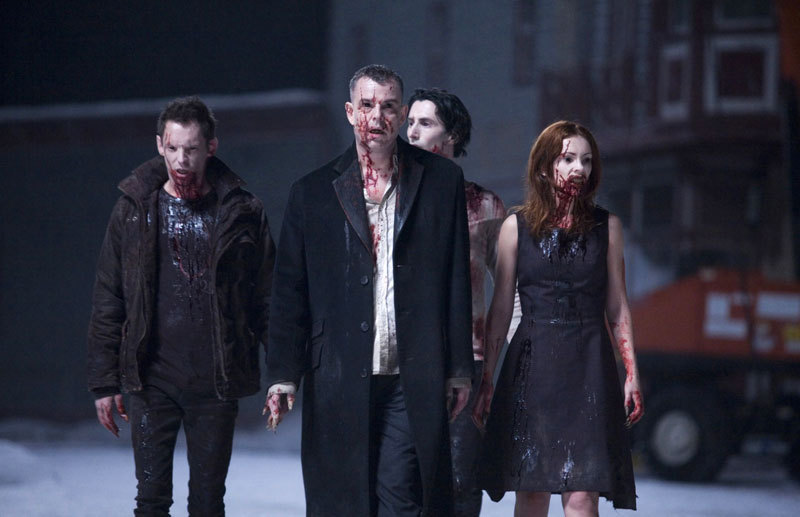
30 Days of Night was hailed as one of the darkest, goriest vampire flicks ever. Updating the blockbuster hyperbolic action of the Blade trilogy, it would usher in a return to the vampire-as-true-horror genre, rather than namby-pamby 'sexy' vampires with diamond skin and such. In the small town of Barrow, northernmost of American outposts in Alaska, a thirty-day night is just beginning, a period of darkness marked by the departure of nearly half the 1,500 inhabitants who flee to warmer, brighter climes. And into this one long night arrives a stranger (Ben Foster), and, of course, a whole bunch of very thirsty vampires.

The strained relationship between town sheriff Eben Oleson (Josh Hartnett) and his estranged wife Stella (Melissa George), who happens to find herself in Barrow just in time to miss the last flight clear, is established nicely enough. Early attempts at meaningful, emotive dialogue are pulled off just about. Night begins to fall. The first killings occur, and a sense of mystery infuses the air.

Unfortunately, that sense of mystery is not particularly engaging. The cinematic beauty of watching the sun set for the last time for an entire month, coupled with some rather nifty opening credits, is not enough to cancel out the fact that the opening drags, and ‘Day 1’ lasts almost half of the film. Once the survivors of the initial onslaught are boarded up in an attic hideout, it already seems inevitable that they will all die. The desperation, the hope and the excitement that might have been worked into fighting off a vampire siege is wholly removed. ‘Day 8’ adds little to the thrill, the next milestone we are given. Where did days 2 - 7  go? An old man, trying to break out, is carried off. Somehow the vampires, who have engineered this conquest, fail to understand that there might be other people hiding in the building. These master monsters, who've been clever enough to think of hitting up an entire town that's dark for a whole month fail really to follow through with their design.

How should one redeem such a piece? Can adding conversations between vampires, a line about how they had tired of hiding in the shadows, enhance the threat they pose? Not really. Instead, it makes the conquest of Barrow, tiny and insignificant as it portrayed to be, into some kind of battleground to protect all of America, and it doesn’t work. Heroism can be found anywhere. Why not make Eben the hero of Barrow, not of America, the world, as a whole? Why try to make this about the entire human race when the audience might want in fact to care about the people of Barrow instead. 

Rapidly descending into trite melodrama. Not dark enough to remain true vampire horror, or swiftly paced enough to add proper tension or expectation in the audience. Adding gore to a weakly carried out film doesn't rocket up into must-see lists, I'm afraid.

~~~
2007
Josh Hartnett, Melissa George
dir. David Slade

Transformers: Revenge of the Fallen


Transformers 1: all right, all told. Remarkably. Transformers 2: a minefield of atrocity. The way this film was put together was infuriatingly, insultingly bad. For a piece to lack coherence to such a degree is horrific. It’s borderline racist, sexist, ageist, and everything-ist. Horrible. It doesn’t deserve any more words.


~~~
2009
Shia LeBeouf, Megan Fox
dir. Michael Bay

Friday, 17 September 2010

The Gone-Away World


Post-apocalyptic adventures across the globe populated by literally every imaginable nasty, kick ass ninjas, some gung-ho super fighters and a wee dose of humour every other word or so doesn't get any better than this, Nick Harkaway's debut novel, The Gone-Away World. 


For a start, The Gone-Away World struggles to be put into a genre-specific box. Sure, it's adventure, and there's a large dose of hard sci-fi in the form of the weapons that bring about the destruction of civilisation as we knew it. But the description on the back of the book suggests bleak action (or once one sees the protagonist's name - Gonzo Lubitsch - bleak, over-the-top, hyperbolic, if not comedic, action) and the opening chapters have their fair share of macho posturing and rushing off on missions in a balls-to-walls kind of way. But more than that, we are launched into an autobiography. Well, it's a biography too. Gonzo's closest friend, his childhood playmate and nearly-brother, begins to tell us all about himself, and all about Gonzo too. So we receive far more than standard adventure narrative or harrowing war ganderings; Gonzo and his buddy instead treat us to school days and a first introduction to gong-fu and girls; to university and first jobs (how I giggled at the Spanish archer, of which I'm a proud fellow recipient); and finally to a war in almost precisely the middle of nowhere in which our brilliant, witty and introspective narrator bemoans the hell of not being shot as civilians and sheep duck for cover and wish everyone would just leave their once pleasant land alone. 

Finally, finally the bombs begin to drop. The droppings hit the metaphorical fan and everything goes batshit crazy. If you've been smiling and marvelling up to this point at Harkaway's imagination, his skilful storytelling clearly underpinned by a strong sense of timing and poise, his ability to pull the rug out from under you repeatedly takes off on a rather more epic scale and mundane tasks like shopping or cooking get narrated with wit and energy. It's as though simply being in the presence of the narrator means things are a) funny and b) likely to get blown up, knocked down, atomised or otherwise in the turn of a page. 

So it's funny. But it's also moving. One can't help but smile that a martial arts fight to the death starts to involve tupperware, but suddenly becomes serious and painful. Or the grin is wiped off one's face with the  romance of the story, of which there is a fair dose, which starts off boyish and playful and gets seriously in the blink of a eye and becomes another way in which the humorous is transformed into the emotionally weighty. To try to create a novel and fill it with a whole gamut of emotional bathos and pathos, while also bouncing around merrily with all kinds of irony, understatement and linguistic creativity, is a very bold undertaking indeed. 

Is there a weakness to The Gone-Away World? Is it too clever for its own good? No, except in one tiny, dangerous way. It'll be an awfully tough act to follow. 

Buy it, read it, read it again, and hope Nick Harkaway has some more gems up his sleeve.

~~~
2009
Nick Harkaway
Windmill Books

Wednesday, 8 September 2010

Speed Racer

Bit of a guilty pleasure here for me. As a proud owner of a Speed Racer red t and a quiet fan of the 60s series, I have to put hand to my heart and declare this is a well put together film. I think I might be the only one.

The film has many of the hallmarks of a Wachowski production. Emphasis is placed heavily on effects and on the power of emotions to overcome any obstacle (Neo's love-gamble anyone?). But it's also marvellously fun.

Speed Racer (Emile Hirsch) has always dreamt of following in his brother Rex's footsteps and being a racer, from his earliest schoolboy daydreams. Ably assisted by the family-run crew of Racer Motors, he becomes a racing car driver, only to discover operating independently is not only dangerous but also extremely difficult when the major corporations want to dominate, and rig (ooh, ahh!), the sport.

It's a bright, vibrant film. Apart from ill-judged comic episodes from the youngest of the Racer progeny, the film sparkles. The Racer parents (Sarandon and Goodman) are both excellent presences, while Hirsch and girlfriend Trixie (Ricci) are both entirely laudable. The tension ratchets up rapidly, and the racing scenes are gloriously over the top and colourful. But beyond any individual performance or the suspense or colours or score, it's essentially a film about going it alone and fighting for something you believe in. And I approve of that.

~~~
2008
Emile Hirsch, Matthew Fox, Christina Ricci, Susan Sarandon, John Goodman
dir. Andy Wachowski, Lana Wachowski

The 13th Warrior

I hesitated before posting this up, partly because I have so little to say about the film and partly because it's just not very good.

Banderas plays Ahmed Ibn Fahdlan, an Arab poet sent as diplomat to the north. He meets some Norsemen, and by a tiresome twist of fate, ends up the thirteenth warrior in a party setting out to rescue a tribe from supernatural enemies.

The film is fairly standard 90s blockbuster fare. So little attention is paid to plot, which creeps predictably onwards, while location and costume are similarly neglected. One imagines that most of the budget must have gone on getting Banderas, and maybe trying to get his English passably accented, that what remained accounted for the poor set and setpieces. It's also a prime case of a Michael Crichton novel being essentially misunderstood. After early commercial successes in adapting the bestselling author to the big screen, there were a spate of poorly made adaptations that fail to capture the essence of his writing and sufficiently translate that into a workable film. So we have a film with poorly imagined characters and dialogue, simply because the makers relies too heavily on a novel. For all novel-film cross-overs, it seems to have been proven that it is not about relying on copying the novel from page to screen, but on finding a film equivalent for many of a given novel's devices. The 13th Warrior expressly fails on that account.
Laughably bad. But not worth one's time for the laughs.

~~~
1999
Antonio Banderas, Vladimir Kulich
dir. John McTiernan

Tuesday, 17 August 2010

Predators

A sequel twenty-one years after the 'original' sequel is no mean feat; Predators claims to be a sequel. It even references the Alien films in its nomenclature, that subtle addition of an 's'. But consequently it's riddled with the same problems most sequels have to face.

For a film as limply plotted as Predators (Selected elite soldiers plus one hapless doctor are ditched on an alien hunting preserve for the predators to practise their skills on... That's literally it.), there were some surprisingly effective moments amongst the dross. Adrien Brody is passable enough in Swarznegger's shoes, remarkable as that might sound; the conversation that directly refers to 1987 (the year of Predator's release) is comicly rendered. But he's not passable enough, and the film never really accepts that it's comic. It's so deadly, dully serious throughout, one can't help but get a little tired of it all.

The film also falls flat on the simplest of moments. The dialogue drags throughout; the landscape changes every five minutes (Continuity people, did you put jungle to evergreen in two minutes down to the planet being 'alien'?); the characters are sketchily drawn at best and killed off in the most meaningless of ways. But I cackled through it. I embraced the idiocy, Hollywood churning out drudge in a style true to form. I'd not go out of my way to see it again. Then again, I probably wouldn't for most films.

~~~
2010
Adrien Brody, Alice Braga
dir. Nimrod Antal

Friday, 13 August 2010

Zombieland

The dead just ain't that funny. That was my overriding feeling by the end of Zombieland. A rather kitsch attempt at what amounted to little more than rendering a video game on-screen left me neither giggling nor really very impressed at all.

There are some lovely ideas behind Zombieland. After the zombie apocalypse, survivors battle to find sustenance against increasingly dangerous odds. Into this wilderness appears Columbus (Jesse Eisenberg), a neurotic boy who goes by the name of his hometown and stays alive by adhereing to a strict series of rules. The rules themselves are fairly amusing, if predictable, and suggest an early awareness of the parody that Zombieland is offering. Even the way in which the rules are presented starts out as seemingly inventive, but quickly becomes tedious, a repeated joke that doesn't gain momentum throughout the film.

Then Columbus meets Tallahassee (Woody Harrelson) and the film lurches sadly towards more plain fare. Sisters (Breslin and Stone) show up; wanton violence abounds, wanton, unimaginative violence; we start to witness a rather insipid love story unfold, and family values start getting pasted all over the place. Then there's the cameo by Bill Murray. Less said about that the better; it was entirely disappointing, and clearly out of place with the tone and style of the film. But perhaps that can be forgiven, because it seems the film struggles to decide what tone it is going for. A slick, over-stylised opening descends into a Hollywood producer's wet dream with romance and redemption as the eventual message. It's sickly sweet.

A great shame. Some clever tricks and a neat concept fail to lift the film above mediocrity. It has the stamp of Hollywood over-production, and it suffers for it.

~~~~
2010
Jesse Eisenberg, Woody Harrelson, Emma Stone, Abigail Breslin
dir. Ruben Fleischer

Inception

Christopher Nolan's sci-fi thrill-ride offers in equal measure suspense, drama, mind-bending plot- and physical twists and a healthy dose of good cinematic fun. It cements his position as a potent blockbuster creator, and reminds viewers of his ability to tell a cracking, complex story.

The basic premise is far from complicated. In a world much like our own, people are able to share dreams together. First developed by the US military for training soldiers (In a dream, while one can feel pain, one normally cannot die: dying simply awakens the dreamer), the compact technology is now exploited for corporate espionage by thieves who kidnap or hijack people's dreams to extract information, trade secrets or gain blackmail leverage.

Dom Cobb (Leonardo DiCaprio) is one such thief, and an excellent one at that, despite his troubled past. But when Seito (Ken Watanabe), a previous target, approaches Cobb with the chance to get charges waiting for him in America dropped, Cobb is forced to embark on a job far more difficult than any before: inception, the planting of an idea inside a mind. Cobb's closest friends try to dissuade him; inception cannot be done.

So Mr Cobb assembles a team about him to undertake the mission. Arthur (Joseph Gordon-Levitt), Ariadne (Ellen Page), Yusuf (Dileep Rao - pictured left) and Eames (Tom Hardy) all have very particular, very cool roles to play in the coming job. The first act is very much an explosive exposition of some of the film's key principles. But the second act, where Cobb plans and plots, is when Inception really starts to sparkle. The dialogue is crisp and to the point; the characters are witty and engaging. After any given scene with a character, particularly Arthur or Eames, I was left wanting more, gently in awe of highly competent performances.

A lot has already been written about some of the special effects in this film. But more than that, Hans Zimmer needs to be praised for the major role his score plays in establishing more than just pure effect but a fully formed mood, an all-encompassing ambience. This is what makes Inception stand out from other standard weak sci-fi fare. It is more than any one detail but the chilling mood of the entire piece that leaves one both thrilled and mentally wearied, in the best possible way.

Special note has to made once more of the performances. DiCaprio is on top form, even if this is not a far cry from his emotionally raw characterisation for Shutter Island. But Gordon-Levitt is super slick, while Cillian Murphy, playing Robert Fischer, is sensational. Murphy is no stranger to emotionally charged performances, but this one crackles. There appears to be so much bubbling beneath the surface in his portrayal that I'm tempted to suggest he's a show stealer here. Meanwhile, Cotillard and Watanabe have depth and detail to their performances that made them thoroughly enjoyable to watch.

Conspiracy theorists and pedants will love the many questions and holes this film throws up, but I believe that only adds to the film's validity as a great blockbuster. I don't know how watertight the concept really is, but I think there's an easy answer: it doesn't need to be. We're dealing with dreams. We're dealing with uncertainty and the kind of material, as Cobb himself notes, that only seems strange once it's ended. One's mind may ache by the final act, but that is surely better than mindless fun. Great re-watching potential, and a great step for Nolan.

~~~
2010
Leonardo DiCaprio, Joseph Gordon-Levitt, Ellen Page, Tom Hardy, Ken Watanabe, Dileep Rao, Marion Cotillard, Cillian Murphy
Written and dir. Christopher Nolan

Friday, 23 July 2010

Rambo: First Blood Part 2

There's really little to say to a franchise spinning itself out needlessly. Then again, Predators opened in cinemas last week and I'm about to review that so maybe something needs to be said about this lukewarm sophomore effort of Stallone's Rambo tetralogy.


The grand shame in this film is its promising start. John Rambo (Sylvester Stallone), hardcore Vietnam veteran, is brought out of retirement and a hard labour penal sentence to return to 'Nam on a reconnaissance mission to locate POWs. Not only does the mission go drastically wrong, but the film starts to appear like it might have something to say about the vilification of the veterans back home in the United States.... until Sly decides he's done with orders, he's done with kit, he's done with clothes. All hell breaks loose.


Sadly it's not very well-choreographed hell. Nor is it underpinned by any kind of feeling or indeed even a semblance of reason. Rambo becomes superhuman just at the moment we hope to break through his untouchable army-hardman facade. The cast around him do little to emphasise his own emotional detachment; no robot stands out amongst robots. A love interest is meaninglessly tossed aside; the rogue general who's orchestrating the whole thing, or even the arrival of Russians (gasp!), does little to lift the madness above the mediocre. Even Trautman (Richard Crenna), Rambo's immediate superior, who played the trickster role in the first film, is barely one-dimensional here.


I can't say I expected better. But I was surprisingly disappointed by how woefully off-track this second Rambo managed to get in 90 minutes.

~~~
1985
Sylvester Stallone, Richard Crenna
dir. George P. Cosmatos

Up

Let's make a film for children. Let's make it funny and colourful and exciting, with the right dose of 'nasty villain' that we can fear and 'lovable idiot' that we can laugh at. Maybe throw in a dash of 'moving sub-plot' to push for a bit more emotional engagement. This film we've just made is definitely not Up.


The fact is, Up has all those elements. It has those elements in exceptionally well-drawn and engaging ways. But it goes so very far beyond that simple recipe that I was left wondering why children's films had ever assumed that that kind of formula worked. Pixar have been bold with Up. The opening sequence, so thoroughly lauded and praised, is something of an eye-opener; in only five minutes of footage, the film tells a whole life story, with the kind of deft brush strokes of plot and character that only master storytellers can aspire to. That's the real secret behind Pixar's genius, that the developers are indeed master fablers who settle for nothing less than a brilliant, gripping story from start to finish.


That opening can also be seen as symptomatic of the entire film; no punches pulled when going for all out emotional drama, no fear of letting emotions other than laughter lead the way in the plot. It's really a miracle that the film is funny at all, so concerned is it with darker emotion. But that means that the humour in the film, which is liberally sprinkled throughout, is all the more poignant. I found myself wondering whether we could really consider this film a comedy by its close. But that in itself is no problem: Pixar have been bold enough not to offer a standard comedy. In doing so, they have given us so much more.


Beautifully plotted, illustrated, scored and voiced, Up is in equal measure charming and moving. A must-see. 


~~~
2009
Edward Asner, Christopher Plummer, Jordan Nagai, Bob Peterson
dir. Pete Docter & Bob Peterson

Tuesday, 30 March 2010

Dai-Nihonjin

I sat down to watch Dai-Nihonjin (Big Man Japan) without being allowed to see the DVD box. Furthermore, my co-watcher made me look away even as he scrolled through the DVD menu. When I asked if I could have a hint as to the film plot, he scowled at me. He wanted to keep as much as possible left as a surprise for me. 


A surprise it was. Daisato (Matsumoto) is a 40-something year old in Japan, who appears to be almost a tramp. As the camera follows him around, documenting his every day activities, we learn his wife has left him, that he only sees his daughter periodically, and that the work he does pays nowhere near enough for him to live comfortably.  We also learn that he is a sad and confused man, who likes umbrellas and dried seaweed because of their ability to go from small to large.


But then the film takes two turns to the surreal: first we discover Daisato's employment. Next, as we think he might be finally learning to excel at it, we see him strangely miss out on any kind of achievement. Vague? Well, I'm glad I wasn't warned, because the surprise factor in watching this made me cry with laughter. It's totally strange and otherworldly and yet also totally mundane and hilarious, especially as most of the footage is faux-documentary and what we see of Daisato and then what he says clash so obviously that it's hard not to giggle. 


It's also moving; it raises that question as to whether we should be amused by someone so washed up. Does Daisato cross the line from pathetic to hilarious or not quite? Even as we watch and laugh at the larger plot revelations, we discover more about his own life, his relationship with his father and grandfather and the choices he has made that have led him to this deplorable state. It's touching, and the documentary filming technique makes the questions ever so soulless, which in itself adds to the emotion. 


Watch it, but don't read anything about it first.


~~~
2007
Hitoshi Matsumoto
Written and directed by Histoshi Matsumoto

Saturday, 13 March 2010

The Magnificent Seven

Over the last ten years, 'remake' has become a bit of a buzzword for cashing in on a franchise for a quick blockbuster buck. Consider Rambo as an example: it widely missed the mark of what made the first film excellent; it misjudged what it was to revive an idea and a character. Not so with The Magnificent Seven.  In fact a film like this one is probably a contributing factor as to why remakes are even palatable at all: it essentially understands its subject matter and story (Kurosawa's 1954 Shichinin no samurai - Seven Samurai) but in transporting it to a new setting and reviving the characters it adds and develops plot, flavour and meaning in a vibrant and effective manner.


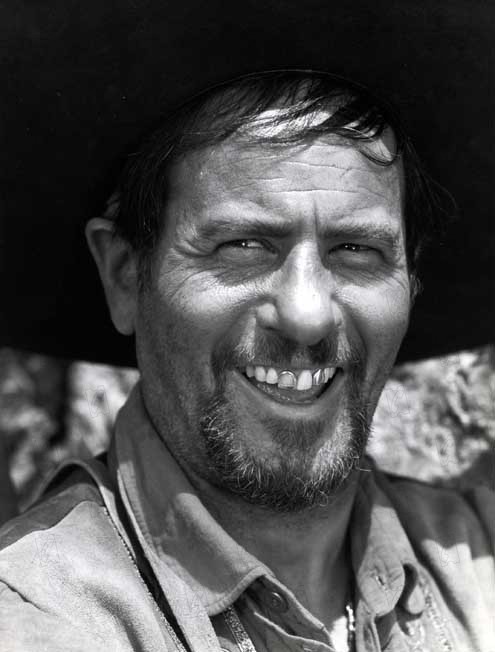
The plot is straightforward enough. A small village is plagued by bandits, led by the vicious yet charismatic Calvera (Wallach who went on to star in The Good, The Bad and the Ugly); in desperation the villagers set out to buy guns to defend themselves and instead stumble upon Chris and Vin (Brynner and McQueen respectively) who take on their case, despite the lack of money. Between the two of them they convince other acquaintances, either through pressing their honour or with the lure of some secret wealth, to join them. 


Upon arrival in the village, they are not given quite the heroes' reception they hoped for. After a series of skirmishes with Calvera's men they are ambushed and forced out of the village. But, with nothing more than honour at stake, the seven return to rescue the village in a final, last-ditch attempt. 


The performances are sensational. Each of the seven are well-drawn enough that even with brief screen appearances a sense of character emerges that engages instantly. Particularly likeable are O'Reilly (Bronson) and Britt (Coburn), both taciturn characters clearly admired for their abilities. O'Reilly's first scene is machismo incarnate, while Britt's cool reserve perfectly matches his counterpart from Seven Samurai, and similarly masks a deadly killing potential. Chico (Horst Buchholz), the young, impetuous seventh, also shines. He's headstrong and moody, but pulls it off and gives us just enough of a chance to see the fear behind his posturing that he's an eminently likeable, if childish, hero.  


Couple that with a lively score, a great sense of dramatic pacing (no lengthy meaningful pauses here) and enough plot elements to keep things sharp, and it's easy to see why The Magnificent Seven holds a position of such gravitas in the cannon not only of westerns, but of remakes. Justly so. It's the sort of film that makes one want to look up every other Bronson or Coburn film, just to marvel at their abilities.


~~~
1960
Val Brynner, Steve McQueen, Eli Wallach, Charles Bronson, Robert Vaughn, Brad Dexter, James Coburn and introducing Horst Buchholz
dir. John Sturges

Rambo

Sylvester Stallone wrote the first Rambo: First Blood screenplay; much like he would do when wrote Rocky, it was another moment when Sly took his career into his own hands and created a character for himself to shine. Shine being the operative word. Then in the late Noughties he decided to reinvent both Rocky and John Rambo by revisiting the franchises. He seems to have misunderstood his own creation with the latest Rambo film entirely.


Rambo appears to be an almost complete parody of itself. John Rambo now lives outside of Burma, catching snakes for a living and boating around in his skiff. He is extremely gruff and about double the size he was in the first film some twenty years ago. He is almost entirely characterless. Compared to the drifter of First Blood, trying his utmost to avoid difficulties and clearly scarred after trauma in conflict in Vietnam, this new Rambo is an empty husk without enough interest for an audience even for the brief hour and a bit the film runs for.


Then there's the violence. Rambo is mercilessly violent, but so are the military Burmese as they slaughter Christians in villages. From the news-broadcast style opening to the close of shooting the film is pockmarked by over-the-top violence that is neither necessary nor really offers anything to the film. It's horrific, but also seemingly didactic, as if to suggest that violence is a way of life that can be opted for. Rambo claims killing is in his blood. But there's no alternative really offered by the film, no chance for any kind of redemption. 


Perhaps that's the strength of the picture: Stallone has taken his violent creation and let the monster run rampant in a balls-to-the-walls high-voltage explosion fest. Maybe. Or maybe Stallone was dizzied by how much it is possible to simulate with modern CGI techniques and let the excitement of a super-shoot take over actually writing a script or plot with any kind of credibility at all.


~~~
2008
Sylvester Stallone
Written and dir. Sylvester Stallone

Thursday, 11 March 2010

Tyrant: Storm of Arrows

I have yet to write a review of Christian Cameron's first ancient Hellenic adventure story, Tyrant. I must say, I thoroughly enjoyed it. Cameron merges an obvious obsession with Alexandros and the ancient world of the 4th Century BC with confident storytelling and some rather epic battle sequences. But sadly, the second novel in the series falls woefully short of the mark.


Tyrant: Storm of Arrows sees our hero, Kineas, an Athenian gentleman-mercenary, where we left him in the the Chersonese. He has defended Olbia against the Macedonian army led by Phocion and fallen for the Sakje warrior princess Srayanka. He has lost comrades too, heroes from the first book. But Niceas, his trusty squire, and the Spartan Philokles remain erstwhile companions. But now trouble is brewing in the East, and the Sakje vote to send troops to assist the Sauromatae who came to their aid against the Macedonians; this time, the threat is Alexandros as he cuts an unstoppable path through the East towards Baktria. 


Kineas starts to dream once more. His dreams are prophetic and he is considered a shaman by some of the Sakje. He is offered a choice: to rule Olbia as a just tyrant (if such a thing is possible, as Kineas himself doubts), or death in the East, fighting side-by-side with his love, Srayanka. He chooses the latter.


But it all goes wrong both in tone and detail. The dream sequences are barely mysterious, barely beyond step-by-step description of 'this happened, then this, then this' that are tedious enough. Alongside this, the descriptions of preparation, of travel, of conversation, also remain mundane. A secondary love interest is introduced with all the tact of a two phalanxes clashing shields; Kineas' doubts are boring, particularly given we already know the choice he has made and indeed the outcome it will offer. 


It's not that Storm of Arrows claims to be a thriller and fails. It makes no such claim. But where the first book used the historical detail as a background, a further lashing of authenticity, to the action, this one is far too bogged down in it. The historical detail becomes the rambling of a pedant rather than a hook into a realistic and engaging world reimagined. It's dry and peacocked, certainly to my taste. A shame, as there are three more books due in the series.


~~~
2009
Christian Cameron
Orion Books

Wednesday, 17 February 2010

Apocalypto

Praise be iPlayer; I caught up with Apocalypto a couple of days after what I believe was its terrestrial premiere in the UK. I'd been meaning to see it for a while. It's not every film that claims to use the original dialect of its characters. Here it's a form of Mayan spoken by all the characters. Perhaps this was last seen to any affect in The Passion of the Christ, where dialogue was conducting exclusively in Latin and Aramaic. Of course, both films were directed by Mel Gibson too.


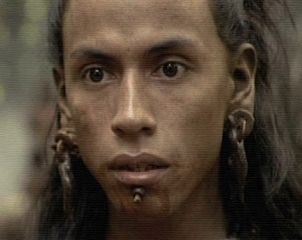
The collapse of a Southern American civilisation is portended not only by exterior threat, but by disease and infighting tearing it apart from within. Jaguar Paw (Rudy Youngblood), a young hunter who lives a peaceful existence with family and friends in a remote village, is kidnapped and taken to a city to be sacrificed. A solar eclipse saves him sacrifice and then a lucky escape sees him flee back into the jungle. Yet his captors decide his escape is not permissable. He is hunted mercilessly until it becomes a battle between prey and predator to decide his fate. 


Youngblood's performance seem to me to be emblematic of the greater faults and successes of Apocalypto. While Jaguar Paw remains innocent and fearful, he was all wide-eyed and slow to comprehend his circumstances. The drama seemed to stretch out interminably ahead of me. Even the moments when I expected some cinematic relief, such as the cliffside drama of the captives or their arrival into the Mayan city, were strangely stripped down and limited. Where Gibson had the opportunity to do some panoramic shots of the city, for instance, we instead were left with all the footage entirely from the point of view of the captives. It was all close-ups and restricted views. We weren't given a chance to have a sense of the scale of the place, to feel the awe that we were meant to see mirrored in the captives' faces. 


Yet when Jaguar Paw finally began to take his circumstances into his own hands, doing away with fear as his father advised and fighting for his freedom and safety, the film itself seemed to pick up too. Where hunt scenes at the start of the film had been tedious and un-engaging, now Jaguar Paw caught my attention and the story seemed to jolt from first to fifth gear in a few mere moments. On the clock, where before I had worried I'd not make it through the second half, now were only a brief chunk of minutes left. The end was in sight!


The other disappointing detail was that Blunted (Jonathan Brewer), another villager regularly mocked by the rest, was in many ways a more interesting and entertaining character than the rather straight hero, Jaguar Paw. Blunted, despite being physically imposing, has trouble getting his wife pregnant. As such he is the laughing stock of the village. Yet his bravery and compassion are just as moving, if not more so, than Jaguar Paw. He represents a harder line than Jaguar Paw, more quick to judge the ills of others and more aware of the realism of a tough existence. It was a shame he was not afforded a larger role in the drama, as throughout I found his character to be more watchable.


It's also a shame that this film really just sits as standard historical blockbuster fare. So much more could have been done with scope and range, with a storyline that engaged more or characterisations that gave the viewer more to care about. But it rests as a rather insipid affair, all told. At least, it does not quite take off in the way that it could, despite great costuming and attention to detail, and, of course, the excellent choice of using native language to offer that extra chance for audience immersion.


~~~
2006
Rudy Youngblood, Jonathan Brewer
dir. Mel Gibson

X-Men Origins: Wolverine

Gosh. This'll be short and anything but sweet. It's making me grin just thinking about this train-wreck of a film, that I had even mentioned to a couple of people about how I only seemed to review things that I thought had some aspect that was absolutely excellent, and asked whether I should watch more dross to compensate, to get a bit of variety in my reviewing. And I have to repeat gosh because I probably have more to say about what I didn't like about this than anything else.


It just seemed so very wrong. So repeatedly wrong. Every attempt to make some kind of gesture to the fans, as with the inclusion of Remy LeBeau (Taylor Kitsch) or the young Cyclops, just seemed to falter. Storyline barely existed, while dialogue and performances were stilted at best. Wolverine himself (Hugh Jackman) looked at though he might have dosed up mightily on painkillers just to get through his own performance. Flat and dead behind the eyes is probably being a bit kind. I cared nothing for these folks. I didn't want to care. I just wanted them to go away.


I suppose the tragedy of all of this is that I am a long time X-Men fan. More than just a comic book fan, I also thought Bryan Singer's offerings were passable, if not fairly excellent, as attempts at the early stage of comic book adaptation for the 21st century. X-Men 3 was woefully bad, but still seems to hang together all right in my memory in comparison to this turgid piece of... can I call it cinema? Who would this film even appeal to? It was thoroughly lifeless.


~~~
2009
Hugh Jackman, Taylor Kitsch, Liev Schreiber, Danny Huston
dir. Gavin Hood

Wednesday, 10 February 2010

The Last Man On Earth

I've gone about all this wrong, I thought, as I tuned in to watch the first adaptation of Richard Matheson's I Am Legend after both The Omega Man (reviewed here) and I Am Legend (with Will Smith). But, in actual fact, I think I might have gone about things the right way.


For starters, The Last Man On Earth stays faithful to a far greater degree to Matheson's novella than either of the later adaptations. Gone is the slick stylisation of The Omega Man or the transplantation to New York of Lawrence's 2007 hit. Instead, we have the same run-down home described in the book, and the same kind of man: a family man, with remembered friends and memories, with science as his gospel, and with a curious immunity to the virus that plagues the rest of the world. Here too we have some of the greatest accuracy to the book's plot: a new breed of 'vampire' that is organising society anew; spies sent to draw out Robert (who strangely is Morgan, not Neville, in The Last Man, a strange, unnecessary deviation in my view); Robert's own interest in science and introspection. The film even ends in the same way as the book.


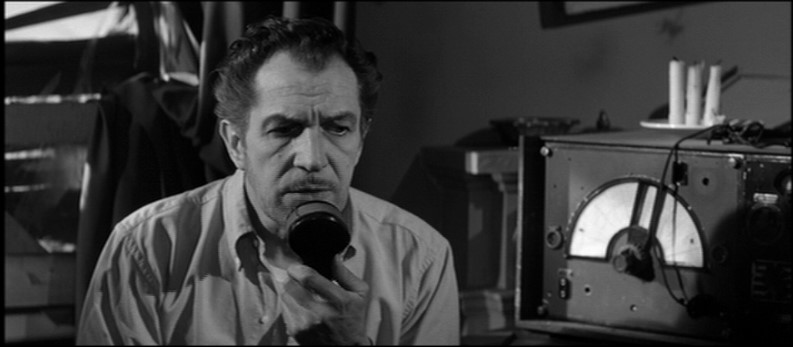
So this was very much the climax of the trilogy for me, even though I came to it last, and should perhaps have reached it first. Price's Robert is brooding and pained at all turns (check out those eyebrows and the lines on his head), and very much aware of his own sickening isolation. This is brought about in part by his voice-overs, so succinct and curious, yet echoing in silence, and in part by a score that, like any good black and white film, mirrors the action on screen. It certainly seemed dated now, but worked very well with the material offered up. 


That was, to my eye, the one weakness of the film: for a paltry 86 minutes it felt a lot longer, and it struggled to keep my attention very effectively. But that surely says more about me as a film watcher than about the film, or at least a little about both of us. The adaptation was as close as I'd want it to be to the novel, and yet that wasn't enough for it to be truly engaging for me. 


Definitely worth a look in for any fans of I Am Legend or The Omega Man, but not quite the cinema gem it could be. I wish I could put my finger on why not...


~~~
1964


Vincent Price, Franca Bettoia, Emma Danieli


dir. Ubaldo Ragona & Sidney Salkow (depending on whether one watches the Italian prints)

Sunday, 20 December 2009

Der Baader Meinhof Komplex

Uli Edel's in-depth depiction of the rise and fall of the RAF (Red Army Faction) in West Germany is both gripping and ultimately wearing. One cannot expect a broadly sympathetic portrayal of a terrorist cell at its most dangerous to be easy-watching. Where Edel's film has its greatest strength is in encouraging the viewer to analyse the action in terms of the individual players alongside the greater socio-political upheaval both in Germany and in the wider world.

We are first introduced to Ulrike Meinhof (Martina Gedeck), as she visits a nudist beach with her husband and two children. She's a journalist writing broadly left-wing pieces encouraging the political engagement of all. Meanwhile, Andreas Baader (Moritz Bleibtreu) and his girlfriend Gudrun Ensslin (Johanna Wokalek), radicalised students, pursue simplistic terrorist activities against department stores. Things come to head when the Shah of Iran visits West Germany, and peaceful anti-Iranian protests are met with violence by pro-regency Iranians in Germany and violent police forces. Meinhof is challenged to stop merely writing about the need for a change in the state, but to act upon her words; an interview with Ensslin finally pushes her over the edge, from commentator to participant.

We watch as the RAF develops from a small group of students into a highly organised, highly active terrorist cell. The core members travel to Jordan and attend a training camp (with mixed results), and return to wage war upon Germany. Their attacks escalate to bombing of American military bases in protest towards American imperialism in Vietnam and the rise of pro-right, fascist groups in Germany. They state, through their mouthpiece Meinhof, how they all have a duty after the Second World War to fight against imperialist tendencies in their country. From there, capture, trial, and suicide, while second- and third-generation cells of the RAF continue their attacks with increasing violence and recklessness.

Perhaps that is a simplified timeline, but the film itself does not shirk from offering the drama in detail. The relationships that develop between the core members, both before and during captivity, are performed with such verve that it is entirely engaging action. It's hard to explain how awkward one feels in sympathising with people whose motives may be laudable but whose actions are not. Perhaps most tellingly is the change we see wrought in both Baader and Meinhof. Baader is bombastic, passionate and aggressive through the first two thirds of the film, and it is only in captivity that we see his spirit tempered by a more measured, considered approach. If before he was terrifying, now he becomes a totally sympathetic presence. Meinhof, meanwhile, the person who sacrificed the most to the cause (her daughters are seized from hiding by an anonymous informant), begins to discover the futility of her words, and imprisonment merely highlights for her that any message she wishes to express will become warped and abused, even by other members of the RAF.

The film raises questions as to suicide; Brigitte (Nadja Uhl), leader of the free RAF members after only seven months in prison, has to silence her comrades who claim that Baader, Meinhof and Ensslin have died from police brutality. To her, their deaths show their ultimate control over their own actions and serve as an example to others; to the younger RAF members, they can only see those actions in terms of the oppression of the state.

One of the greatest strengths of this piece is that characters on both sides come across sympathetically. Certainly the anonymous police presence is intimidating, but the man charged with eliminating the RAF states time and again that without political change, radicalised students will turn again and again to violence. Part of the success of the film is how we are encouraged to see that many different people from different spheres were all pushing towards the same goal, even if the methods differed so broadly. This is brought about by the patience with which the story is told, each episode adding further information towards this picture of a state in turmoil beneath the surface, and the actions of a few affecting the many.

It wasn't the easiest film to watch, but perhaps that was because the pace, so deliberately focused and intense, left for tiring viewing. But the result was worth it; that strange sense of being so strong moved the plight of those many years ago, in a world far different than my own.

~~~~~
2008

Martina Gedeck, Moritz Bleibtreu, Johanna Wokalek, Nadja Uhl, Stipe Erceg, Vinzenz Kiefer

dir. Uli Edel