Friday, 13 August 2010

Zombieland

The dead just ain't that funny. That was my overriding feeling by the end of Zombieland. A rather kitsch attempt at what amounted to little more than rendering a video game on-screen left me neither giggling nor really very impressed at all.

There are some lovely ideas behind Zombieland. After the zombie apocalypse, survivors battle to find sustenance against increasingly dangerous odds. Into this wilderness appears Columbus (Jesse Eisenberg), a neurotic boy who goes by the name of his hometown and stays alive by adhereing to a strict series of rules. The rules themselves are fairly amusing, if predictable, and suggest an early awareness of the parody that Zombieland is offering. Even the way in which the rules are presented starts out as seemingly inventive, but quickly becomes tedious, a repeated joke that doesn't gain momentum throughout the film.

Then Columbus meets Tallahassee (Woody Harrelson) and the film lurches sadly towards more plain fare. Sisters (Breslin and Stone) show up; wanton violence abounds, wanton, unimaginative violence; we start to witness a rather insipid love story unfold, and family values start getting pasted all over the place. Then there's the cameo by Bill Murray. Less said about that the better; it was entirely disappointing, and clearly out of place with the tone and style of the film. But perhaps that can be forgiven, because it seems the film struggles to decide what tone it is going for. A slick, over-stylised opening descends into a Hollywood producer's wet dream with romance and redemption as the eventual message. It's sickly sweet.

A great shame. Some clever tricks and a neat concept fail to lift the film above mediocrity. It has the stamp of Hollywood over-production, and it suffers for it.

~~~~
2010
Jesse Eisenberg, Woody Harrelson, Emma Stone, Abigail Breslin
dir. Ruben Fleischer

Inception

Christopher Nolan's sci-fi thrill-ride offers in equal measure suspense, drama, mind-bending plot- and physical twists and a healthy dose of good cinematic fun. It cements his position as a potent blockbuster creator, and reminds viewers of his ability to tell a cracking, complex story.

The basic premise is far from complicated. In a world much like our own, people are able to share dreams together. First developed by the US military for training soldiers (In a dream, while one can feel pain, one normally cannot die: dying simply awakens the dreamer), the compact technology is now exploited for corporate espionage by thieves who kidnap or hijack people's dreams to extract information, trade secrets or gain blackmail leverage.

Dom Cobb (Leonardo DiCaprio) is one such thief, and an excellent one at that, despite his troubled past. But when Seito (Ken Watanabe), a previous target, approaches Cobb with the chance to get charges waiting for him in America dropped, Cobb is forced to embark on a job far more difficult than any before: inception, the planting of an idea inside a mind. Cobb's closest friends try to dissuade him; inception cannot be done.

So Mr Cobb assembles a team about him to undertake the mission. Arthur (Joseph Gordon-Levitt), Ariadne (Ellen Page), Yusuf (Dileep Rao - pictured left) and Eames (Tom Hardy) all have very particular, very cool roles to play in the coming job. The first act is very much an explosive exposition of some of the film's key principles. But the second act, where Cobb plans and plots, is when Inception really starts to sparkle. The dialogue is crisp and to the point; the characters are witty and engaging. After any given scene with a character, particularly Arthur or Eames, I was left wanting more, gently in awe of highly competent performances.

A lot has already been written about some of the special effects in this film. But more than that, Hans Zimmer needs to be praised for the major role his score plays in establishing more than just pure effect but a fully formed mood, an all-encompassing ambience. This is what makes Inception stand out from other standard weak sci-fi fare. It is more than any one detail but the chilling mood of the entire piece that leaves one both thrilled and mentally wearied, in the best possible way.

Special note has to made once more of the performances. DiCaprio is on top form, even if this is not a far cry from his emotionally raw characterisation for Shutter Island. But Gordon-Levitt is super slick, while Cillian Murphy, playing Robert Fischer, is sensational. Murphy is no stranger to emotionally charged performances, but this one crackles. There appears to be so much bubbling beneath the surface in his portrayal that I'm tempted to suggest he's a show stealer here. Meanwhile, Cotillard and Watanabe have depth and detail to their performances that made them thoroughly enjoyable to watch.

Conspiracy theorists and pedants will love the many questions and holes this film throws up, but I believe that only adds to the film's validity as a great blockbuster. I don't know how watertight the concept really is, but I think there's an easy answer: it doesn't need to be. We're dealing with dreams. We're dealing with uncertainty and the kind of material, as Cobb himself notes, that only seems strange once it's ended. One's mind may ache by the final act, but that is surely better than mindless fun. Great re-watching potential, and a great step for Nolan.

~~~
2010
Leonardo DiCaprio, Joseph Gordon-Levitt, Ellen Page, Tom Hardy, Ken Watanabe, Dileep Rao, Marion Cotillard, Cillian Murphy
Written and dir. Christopher Nolan

Tuesday, 3 August 2010

In Other Rooms, Other Wonders

Is it enough to take a literary style already heartily employed elsewhere and transplant it to a new country and culture to create a great literary movement? I would argue it is not, and further, that much of the praise heaped upon Daniyal Mueenuddin's collection of short stories indicates wonder at what he has done, rather than true literary merit.


In Other Rooms, Other Wonders is a series of short stories that all feature in some way or other the Harouni family. Sometimes it is K. K. Harouni, a rich businessman, who appears, but as often the stories detail the lives of various of his servants and retainers in and around Lahore. In other stories, like Our Lady of Paris or A Spoiled Man, we deal with relatives of the powerful K. K., lesser Harounis as it were. But such a style, of repeating characters and stories that seem to orbit a central theme or hint at a fully fleshed-out imagined world, is one that America has been familiar with from at least Salinger, while one might argue that as early as Vergil were writers playing with hinting at presences beyond the text, as Vergil himself does in the EcloguesThat is to say, Mueenuddin is not innovating in giving us a series of Pakistani stories all featuring the same interwoven characters, present and absent.


Nor is he innovating in setting those stories primarily in Pakistan. Again, much of the hype surrounding the book comes from readers' excitement in recognising a foreign place or way of life succinctly expressed in literature. But Mueenuddin is not the first to write about Pakistan, nor should he be praised only because his theme is Pakistan. In fact, if the only literary merit of a piece is that it describes a place rarely described, we are considering a travel guide over a work of literary merit.


These two problems in early comments on In Other Rooms, Other Wonders would not trouble me so much if the writing itself stood up to close scrutiny. Unfortunately it does not. After a rather insipid opening story, in which I believe we are meant to be shocked, while I hardly stirred, Mueenuddin draws us at a laborious pace through a host of self-obsessed, self-serving characters who can barely see beyond themselves, yet alone their own horizons. Perhaps there is truth in such a depiction, in the way in which a more feudal society can impose stronger restrictions on its occupants' dreams and aspirations. Yet Mueenuddin labours the point, just like he labours his characters. Nothing is left to the imagination; nothing is intimated or expressed without it being made explicit. Time and again the delicately expressed moments in an individual story that might have charmed me were then brusquely explained and pored over, leaving nothing left for me to ponder myself. Even Lily, my favourite story of the collection, is brought to an appallingly tedious conclusion by the unwavering pace of the writing.


I fear I am falling into the same trap; Mueenuddin's ideas are there, and many of them are engaging. But the writing cries out for an editor, internal or otherwise, to prune back some of the verbosity that dogs and overwhelms what could be handled beautifully and delicately.

~~~
2009
Daniyal Mueenuddin
Random House, India

Toy Story 3

If one reckoned Pixar has surpassed themselves with the genre-defying adventure of Up, Toy Story 3 only takes the expectation they had created and deftly destroys it once more. Pixar had announced repeatedly they would not complete the trilogy until they had a story worth telling. Here they tell a story and a half.


Fifteen years have passed since the first films. In that time Andy has grown up and now he's off to college. Will he take Woody and Buzz with him? What will happen to the trusted toys once Andy is gone? So begins an adventure that tests their courage and loyalty while also providing approximately two laughs a minute. Maybe more. And a dash of tears.


The fact is, it's a great story. It's a great story that's not afraid to get you crying, to get you caring about its protagonists, and rather than shying away from the emotional deathtrap that leaving for college no doubt is for many people, it embraces it. The film demands we engage with what the characters are no doubt feeling.


At no point does it feel like we're moving gag to gag. Rather, every laugh I had I could barely believe, so exciting and compelling was the action. If one compares this sequel with another in cinemas currently, Shrek Forever After, the fourth instalment of the Shrek series, Pixar's excellence and grasp of humour is even more obvious. In the Shrek film (which I almost certainly will not review), the old stories are rehashed, and the jokes are not only predictable but repeated from previous films. Furthermore, our hero, Shrek, is about as ogrely as a wet blanket. He is a drip. Compare him to Woody, the resourceful hero of Toy Story 3, who never stops believing in Andy or his comrades. Woody makes mistakes, and can be stubborn, but these qualities only go to highlight how well imagined a character he is. He's no weed. Or Lotso, the bear at the kindergarten. His turn as villain is almost chilling: who wants to imagine cuddly bears or dolls as evil? 


Well-signalled plot points didn't stand out, but left me with that happy satisfaction in thinking "oh, I knew that meant something!". At no point does Toy Story 3 descend into a pedestrian exercise of box ticking. The story is all, and it's a wonder to behold.  Truly a demonstration of Pixar's mastery of what they do, the kings of modern animated storytelling.


~~~
2010
Tom Hanks, Tim Allen, Joan Cusack
dir. Lee Unkrich

Friday, 23 July 2010

Eclipse

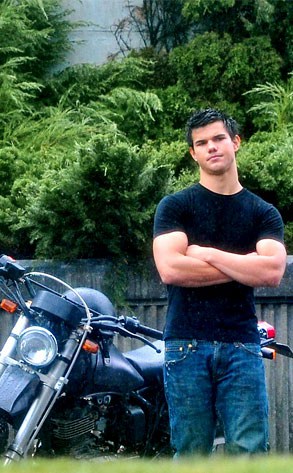
If one ever is inclined to question how important a change in director really can be on a film franchise, compare New Moon and Eclipse. The former film managed to get almost everything wrong and sorely misjudged the original charm of Twilight, while also doggedly and tediously rendering details of the text in such a way as to deprive them of any significance or charm.. The latter showed an impressive return to form and left me firmly in the belief that Twilight was in fact a great teen love story which happened to have a silly background of vampires and that that, most importantly, didn't really detract from a great movie.


For a start, despite continuing to rely on rather outrageous effects (and who wants to thank Stephanie Meyer for diamond-skinned vamps?), Eclipse manages to bumble through a hit-and-miss script that at least gives the protagonists a chance to speak their minds. Werewolf Jacob (Taylor Lautner) gives his most convincing arguments for Bella's heart, or is at least his most insistent, while she explains herself a little better than she's yet managed. Meanwhile Edward (Robert Pattinson), remarkably, pulls off a heretowith unmanaged feat and appears almost entirely sympathetic (and thankfully less sparkly). His reasons for being with Bella (Kristen Stewart), his old-fashioned values and concern for her soul, are offered in far more detail than we have seen before. He's not, for once, moany about it. He's clear and almost admirable. It's nice.


The plot flounders, but when were the Twilight films concerned with plot? There's less of the dire Volturi, and that's grand. The script, as noted, is patchy, but that means there's alternating hilariously bad, and hilariously sincere, dialogue, and why not? Since when were teens all about slick lines and pregnant pauses? The show must go on, at the end of the day, and Eclipse foreshadows a little more pregnancy to come: the bedroom scene between Bella and Edward is perhaps the most amusing scene in the film. Yet behind it lurks menace. Whoever takes up the Twilight mantle for the last book, which will be split into two films, better prepare to get as serious as Eclipse. And serious not with effects or emotional sincerity, but in giving the story a chance to flourish, and not taking itself too seriously. What teen movie does?


~~~
2010
Kristen Stewart, Robert Pattinson, Taylor Lautner
dir. David Slade

Rambo: First Blood Part 2

There's really little to say to a franchise spinning itself out needlessly. Then again, Predators opened in cinemas last week and I'm about to review that so maybe something needs to be said about this lukewarm sophomore effort of Stallone's Rambo tetralogy.


The grand shame in this film is its promising start. John Rambo (Sylvester Stallone), hardcore Vietnam veteran, is brought out of retirement and a hard labour penal sentence to return to 'Nam on a reconnaissance mission to locate POWs. Not only does the mission go drastically wrong, but the film starts to appear like it might have something to say about the vilification of the veterans back home in the United States.... until Sly decides he's done with orders, he's done with kit, he's done with clothes. All hell breaks loose.


Sadly it's not very well-choreographed hell. Nor is it underpinned by any kind of feeling or indeed even a semblance of reason. Rambo becomes superhuman just at the moment we hope to break through his untouchable army-hardman facade. The cast around him do little to emphasise his own emotional detachment; no robot stands out amongst robots. A love interest is meaninglessly tossed aside; the rogue general who's orchestrating the whole thing, or even the arrival of Russians (gasp!), does little to lift the madness above the mediocre. Even Trautman (Richard Crenna), Rambo's immediate superior, who played the trickster role in the first film, is barely one-dimensional here.


I can't say I expected better. But I was surprisingly disappointed by how woefully off-track this second Rambo managed to get in 90 minutes.

~~~
1985
Sylvester Stallone, Richard Crenna
dir. George P. Cosmatos

Up

Let's make a film for children. Let's make it funny and colourful and exciting, with the right dose of 'nasty villain' that we can fear and 'lovable idiot' that we can laugh at. Maybe throw in a dash of 'moving sub-plot' to push for a bit more emotional engagement. This film we've just made is definitely not Up.


The fact is, Up has all those elements. It has those elements in exceptionally well-drawn and engaging ways. But it goes so very far beyond that simple recipe that I was left wondering why children's films had ever assumed that that kind of formula worked. Pixar have been bold with Up. The opening sequence, so thoroughly lauded and praised, is something of an eye-opener; in only five minutes of footage, the film tells a whole life story, with the kind of deft brush strokes of plot and character that only master storytellers can aspire to. That's the real secret behind Pixar's genius, that the developers are indeed master fablers who settle for nothing less than a brilliant, gripping story from start to finish.


That opening can also be seen as symptomatic of the entire film; no punches pulled when going for all out emotional drama, no fear of letting emotions other than laughter lead the way in the plot. It's really a miracle that the film is funny at all, so concerned is it with darker emotion. But that means that the humour in the film, which is liberally sprinkled throughout, is all the more poignant. I found myself wondering whether we could really consider this film a comedy by its close. But that in itself is no problem: Pixar have been bold enough not to offer a standard comedy. In doing so, they have given us so much more.


Beautifully plotted, illustrated, scored and voiced, Up is in equal measure charming and moving. A must-see. 


~~~
2009
Edward Asner, Christopher Plummer, Jordan Nagai, Bob Peterson
dir. Pete Docter & Bob Peterson