Showing posts with label thriller. Show all posts

Friday, 11 March 2011

Bronson


“My name is Charlie Bronson,” Tom Hardy declares to camera, and so begins an exploration of Britain’s most famous criminal, and, perhaps fittingly, the fact that for most of Bronson’s infamous career, he was not known by that Hollywood moniker lifted from the Death Wish muscle-man, instead going by his birth name of Michael Peterson.


Naming is central to Bronson, as the audience is faced by a man so close to inscrutable mania any simple handles are essential for us to understand what we are dealing with. On the one hand, we see Bronson as the performer, delivering monologues and brief performance pieces to an audience that is largely mute and unreadable. He proclaims to have a set of rules which he always abides, sometimes even unwittingly, as the final scene in the asylum reveals. On the other, Bronson as inmate presents us with brooding frustration and an ever-ready tongue, willing to declare “You fucking cunt” at the first sign of a prison warden.

Peterson’s story is terrifying in its simplicity: a decent enough upbringing, but a penchant for violence, for spectacle, had the young husband sentenced to 7 years in prison. He had, at the time of filming, served 34 years in various penitentiaries, 30 of them in solitary confinement. But the film does not ask why explicitly, and merely tries to delve into the man’s mind and present the facts, as far as we can gather them, from Bronson’s perspective instead. That is what elevates the piece from being just another biopic, or indeed a celebration of violence; we are incarcerated with Charlie Bronson as he rails against everything he cannot comprehend. We are there for the ride.

The film is far from perfect: there are a couple of gaping plot holes (particularly with Alison, the girl Bronson falls for in his 69 day spell on the outside, who simply fades out of the narrative as she pursues engagement with an even-more-unseen Brian) but these can be forgiven by the format: the film purports to be based on a true story, and life is so often stranger than fiction. And the central question of the piece: how much we can in fact understand Charlie Bronson, is left answered, in its own way, by how strange a creature he becomes. His early hulking silences, taken to be scheming, by the close seem much more significant: the blanks of a mind so completely turned upon itself and other humans as to be entirely inaccessible. Tom Hardy’s performance is startling and visceral; it’s hard to look away from him as he transforms from man to something else entirely. That alone leaves the film with a recommendation; but there’s something in the construction, in the pathos evoked and the quasi-stylised violence, again and again, underpinning Bronson’s strange moral code, that elevates Bronson from violent thriller to something much more. Chilling. 

~~~
2008
Tom Hardy
dir. Nicolas Winding Refn

Wednesday, 29 September 2010

Daybreakers

Daybreakers takes the premise that after the emergence of the vampire strain, all was conquered swiftly in its path. Humans now exist in the minority, hunted for their tasty blood and shying away from cities which now have underground tunnel networks to allow vampires to get around even by day. 

Ten years on, by a rather crafty series of news bulletins, mini-scenes and overheard snatches of conversation, we discover human blood may be drying up. Humans may in fact be going extinct. Blood deprived vamps, the poorest of the poor, are mutating into monsters, while blood investors start withdrawing their human capital to save the blood for themselves. And in the centre of the mess stands chief haematologist Edward Dalton (Ethan Hawke), an unwilling vampire at best, and  certainly a humanity sympathiser (even if he's embraced the vampire look pretty slickly). 

Hawke's performance is perfectly fine. He scowls a lot and looks pasty. He's entirely outdone by the delicious Audrey (Claudia Karvan, who must have been sexed up so that the audience might feel a fraction of Dalton's own longing for her blood) and even more so by a star turn from Defoe, who plays the hicky-gung-ho Lionel 'Elvis' Cormac, leader of the human resistance. (Why wouldn't I use that image again? Look at Defoe's expression!) It's an entertaining, absurd performance and Defoe shines, southern drawl and all. He's a consummate performer who demands attention throughout, and his intensity and slightly crazed leer match his character's perfectly. 

Meanwhile, plot and design complement each other comfortably. Despite a lamentably obvious human-capture setpiece, the supporting characters are used to full effect and the story trots along merrily and enjoyably. There are a couple of needlessly gory deaths; but there is also enough blood and madness around for it almost to make sense, especially given the well-told background of riots and vamps losing their nerve. After all, in a world that's running short on blood, any time there is bloodletting, there's that tinge of useless waste underlying my usual gut reaction of 'oh needless gore'. It's a subtle detail, but it pleased me some. 

I had expected something along the lines of Blade 3 - action, laser bows, idiocy. Instead I got a rather terser, tighter piece, filled with energy and engaging detail. It wasn't the most sophisticated film ever, but I'd watch it again to catch all the details I missed, and first time through, it was a joy to watch.

~~~
2009
Ethan Hawke, Claudia Karvan, Willem Defoe, Sam Neill
dir. Michael Spierig, Peter Spierig

Wednesday, 8 September 2010

The State Counsellor (Fandorin 6)

I've already reviewed the first five Fandorin adventures (starting with The Winter Queen) State Counsellor has been regarded by many as the best Fandorin narrative. It was the first book to be made into a film, and maintains popular support.

But I did not feel Akunin managed anything novel or thrilling with this offering. A gruesome murder implicating Fandorin sets the wheels of an investigation in motion. Very soon we see that dangerous nihilist revolutionaries threaten Russia. Different police inspectors and special agents get thrown into the mix; they all have their own reasons for helping or hindering the investigation. And in the middle, Fandorin, trying to piece together the evidence as best he can. The nihilists do not seem to particularly threaten. In fact, it felt almost as though Akunin was in some way attempting to foreshadow early twentieth century history by the actions of these revolutionaries, and that barely added anything to the narrative.

Part of The State Counsellor's weakness surely lies both in style and in villain. For the former, no distinct narrative voice deprives Akunin of one of his successful stylistic tricks (Compare Turkish Gambit or Special Assignments). Meanwhile, the latter, an altogether unimpressive character, Green, leaves much to be desired. There never seems to be a great threat to Fandorin. In fact, he is dispassionately removed from the majority of the drama. When one compares Green with earlier villains, particularly the master schemers of The Winter Queen and Turkish Gambit, or the terribly precise murderer of The Death of Achilles, he does not come off well. There are no major distinguishing features.

Fandorin's love interest for this story at least has a spark to her. Esfir Litvinova, a young society beauty, with revolutionary sympathies, is both unpredictable and fiery, making for a beautiful foil to Fandorin's inscrutable routines. Her very disdain for him, softening to attraction and even love, is a familiar pattern for females to follow with regard to Fandorin, but it's executed excellently here. The humour evoked by Fandorin's double confusion both with his case and the affairs of the heart is also particularly enjoyable.

The writing remains lively and I raced through the drama. But I was not wowed or awed like I have been with earlier Fandorin books. Has Akunin used all his tricks up? Am I missing a beat?

~~~
2008
Boris Akunin translated by Andrew Bromfield
Weidenfeld & Nicolson

Special Assignments (Fandorin 5)

Erast Petrovich Fandorin returns in two short stories, this time narrated by the young Anisii Tulipov. Akunin remains on form with these two tales of Fandorin's intelligence pitted against devious, dangerous Moscow criminals.

In The Jack of Spades, chance has Tulipov, who feels as though life has always gone against him, assigned to support the Deputy to the Governor of Moscow for Special Assignments (Fandorin of course). In such a position, Tulipov relates the strange habits of the young, grey-templed sleuth. Their quarry, a master of disguise, gives them the run of the city.

Then in The Decorator worlds collide as it seems Jack the Ripper may have made it to Moscow. The second story is a thrilling re-imagining of Ripper mythology, made all the more exciting both by Fandorin's intellect and the filter through which we gain access to it: Tulipov.

Akunin has struck a familiar tone with a third party narrator. While Turkish Gambit was perhaps my favourite of the Fandorin books, Special Assignments, despite this familiarity, does little to rise above the very high bar Akunin has set for himself. But the host of well imagined characters and locations, and the ability to spin a gripping story remains intact and I devoured both tales voraciously. Onwards!

~~~
2007
Boris Akunin, translated by Andrew Bromfield.
Weidenfeld & Nicolson (UK); Random House (USA)

Tuesday, 30 March 2010

Shutter Island

The more I watch and review, the more my ignorance of all things cinematic becomes apparent. But I can't say I'm not enjoying learning that I know so little; I like the challenge of trying to learn more. 


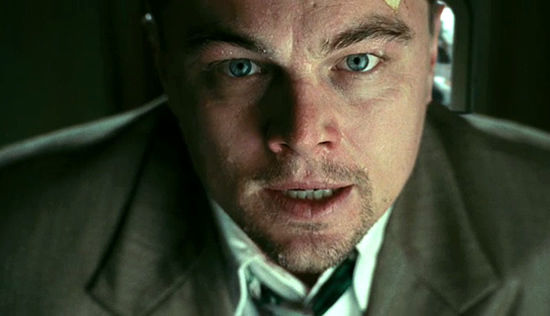
So, how to review a film that was both a joy to watch and yet also depends entirely on mystery for audience engagement? How much can I say? Well, this: Teddy Daniels (DiCaprio), a US Marshall, together with his partner Chuck (Ruffalo), sets out to Shutter Island from Boston, to investigate the case of a missing girl. The island houses the criminally insane, three wards for cases declared ultimately incurable, where Dr. Cawley (Kingsley) uses radical methods to attempt to rehabilitate and 'cure' his patients. So Daniels and Chuck begin to investigate the island, and see if they can turn up any clues as to this girl's disappearance.


The pacing is beautiful from the offing: we know something's up and Teddy is clearly concerned, but the tension is left to simmer, as we, like Teddy, try to piece together the hints and signs. Point-of-view from Teddy as well gives us a sense of the place, and quickly even the most mundane of acts, like sweeping leaves, seems loaded; the guards and patients are intimidating just to look at.


The camera-work is nothing short of scintillating either; throughout the film there are sequences of 'mess', where flames or rain or hail or leaves or dust or ash fly across the shot, framing the action with their own activity. It's obvious enough to be arresting, but not to be invasive. I was fully aware of the intensity of such shots, but they did not seem too clichéd. They seemed to evoke me a rather knowing nod that I was watching something particularly masterful. 


And on mastery, the performances are also something to be marvelled at. I'm tempted to say this was Leo's greatest performance (though some might want to posit What's Eating Gilbert Grape? or The Departed or even Blood Diamond if you can ignore bad accents); Kingsley and Ruffalo are spot on throughout, and the shifts in Kingsley from benign to threatening are so subtly performed as to be thoroughly chilling. It's their performances that leave one feeling like this wasn't simply a DiCaprio showcase but something far more coherent and controlled; that Scorsese knows how to get sound and light and colour and action all pulling together to take the audience by the throat and drag them bodily into his story.


The conclusion of the film: phenomenal. A reveal that was both painfully obvious and yet adroitly handled. A truth that bordered on the pat but deftly swung away from it. A final denouement, as well, that left me and my fellow audience members divided as to its outcome. And my conclusion: I'd recommend this to anyone.


~~~
2010
Leonardo DiCaprio, Ben Kingsley, Mark Ruffalo
Written by Laeta Kalogridis
Dir. Martin Scorsese


Sunday, 14 March 2010

Moon

Duncan Jones's Moon, which rightly earned him a Brit for best newcomer this year, sees Sam Bell (Sam Rockwell) as astronaut working for Lunar Industries on the dark side of the moon. He is reaching the end of a three year contract mining for energy deposits in the moon rock, and longs to return home to his wife and young child. But an unfortunate accident causes Bell's situation to take a turn for the worse, and suddenly the comfort of his moon-base is transformed into a hall of riddles.


I don't want to spoil a plot that unfolds fairly linearly but is a delight nonetheless with a couple of great revelations. Instead, it has to be noted that Rockwell's performance is nothing short of consummate. He shows off a diversity and depth that is demanded by what is practically a one man film, and rises to the challenges of isolation impressively. Jones also captures that mood of isolation very effectively, with scenes of silence as Bell wanders the station, filling his time as best he can as he counts down the final two weeks.


As for the style of the film, it was something reminiscent of Danny Boyle's 2007 Sunshine, a modern sci-fi thriller that re-explores what our future beyond Earth might be like. But while Sunshine went out of its way to invert expectations as to what space travel or space-suits might be like (remember these?), Moon sits more closely to traditional expectations. Food is boil-in-the-bag; Bell plays ping-pong and does woodcarving. There's a simplicity and a lack of sci-fi shockers that heightens the sense of tension and isolation that Jones has strived for, and attained. 


And all this complemented by a lovely, repetitive score, which, of course, mirrors something of Bell's own situation, and gives that sense of loneliness, and is only broken by three moments in the film: twice his alarm clock blares out a garish song, and once when he insists on dancing rather maniacally for thirty seconds or so. All told, the elements of this film pull together towards a mood, a sensation, an intensity, that is rarely seen. It was a shame it didn't receive a broader release.


~~~
2009
Sam Rockwell
dir. Duncan Jones

In The Loop

Swearing is often not to everyone's taste. Indeed, excessive swearing can go so far as to detract from an otherwise good script or plot. Yet In The Loop, the film that carries some of the characters from the British political satire The Thick of It into their first feature, not only hits that 'excessive swearing' barrier, but careens through it with such vigour, it comes out the other side still running.


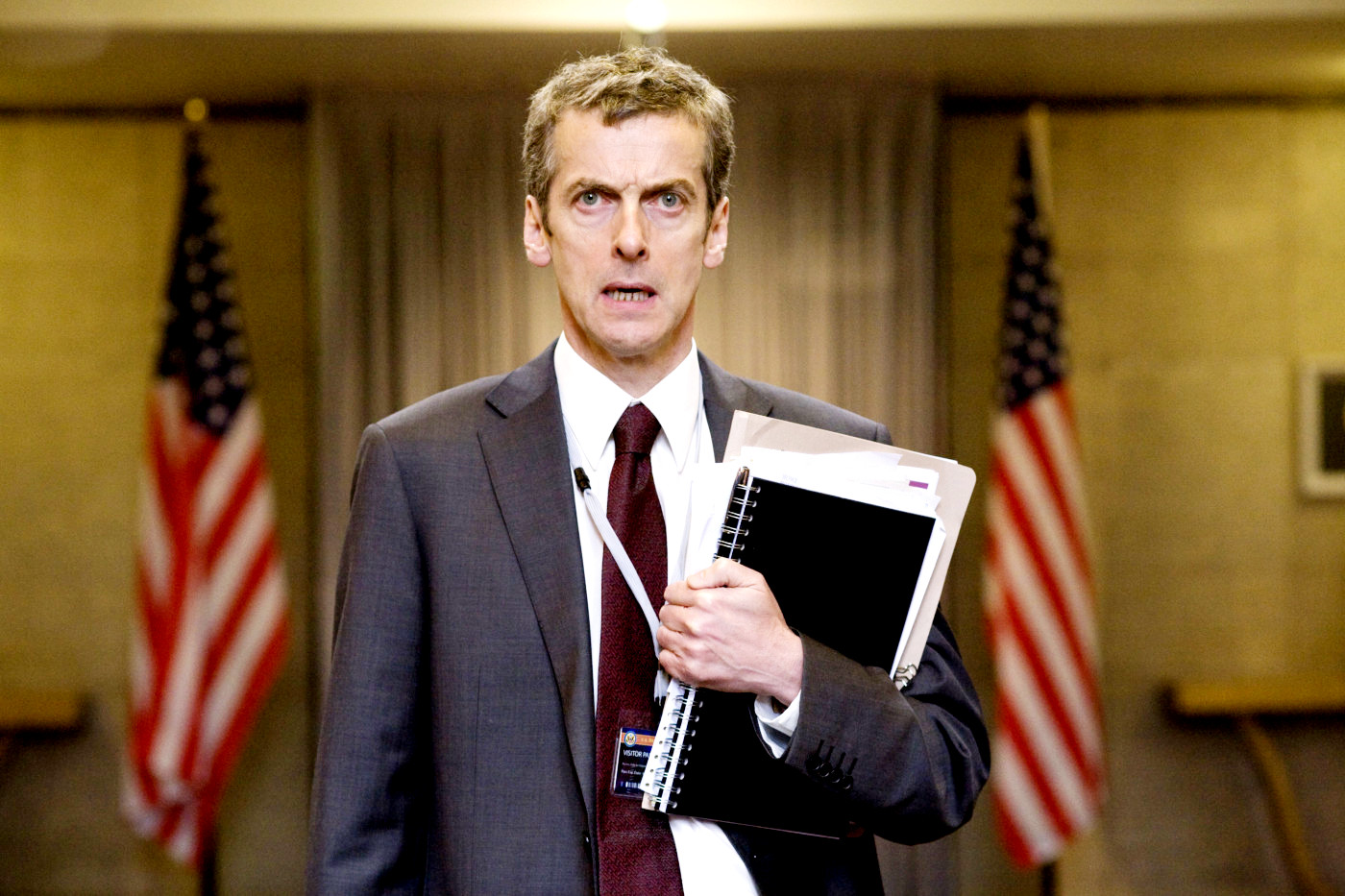
Malcolm Tucker (Peter Capaldi), Head of Communications to the PM, sends the Secretary of State for International Development, Simon Foster (Tom Hollander), on a fact finding mission to the US after a series of disastrous interviews have placed the latter in a rather precarious position with regard to the inevitability of war. Meanwhile, Tucker himself also heads to Washington to pull strings and oil the political machine. A series of twists and turns make war seem not only inevitable but imminent, and Foster is forced to the sidelines as he watches things fall apart before his eyes, ineffectually assisted by his own Coms officer, Judy Molloy, and the new bug, Toby Wright (Gina McKee & Chris Addison). 


Judy is dour and worn-down by Tucker's verbal gymnastics. Foster gamely tries to make a stand, and indeed once remarks "I'm on the verge of taking a stand", to the scorn of those around him. Meanwhile, Toby is utterly dislikeable: he's callous and bumbling, and it seems as though the only reason he's got the job he has is through a horrid combination of backstabbing and brown-nosing. Certainly that is what he spends most of his time doing while working for Foster.


But of course, the show is stolen by Capaldi. His Tucker is now gaining a strong reputation in Britain and further afield, not just for the coarseness of his language, but his sheer inventiveness when it comes to insults. He seems never caught off his guard, and to the four writers' credit, they've created a beast of a man who becomes both anti-hero and anti-Christ as he drags the UK towards agreeing to go to war. And yet, for all that, the character is somehow likeable. If not likeable, then admirable. There's a certain poetry to how much Tucker doles out. Even coming head to head with David Rasche or James Gandolfini (big hitters in the US political scene, we are meant to understand), he stands his ground, just about. Then as he tangles with smaller fry, like Anna Chlumsky or Paul Higgins, it's deliciously shocking how rude he can be on first meeting. 


A perfectly solid effort, funny throughout, darkly so, and with an undercurrent of chill when one considers our own recent history. It's a noble effort to suggest that governments may be riddled to the highest level with incompetence and personality clashes and yet still draw out a smile. Or is that just a warning that we're laughing at the wrong things? 


~~~
2009
Peter Capaldi, Tom Hollander, Gina McKee, Chris Addison, James Gandolfini
dir. Armando Iannucci

Wednesday, 17 February 2010

Sherlock Holmes

One needs to be a touch careful with films that delay their release date by a few months. Certainly it's possible that things get delayed post-production or mid-production, and one can't always plan for every hazard Fate might throw up. But having the posters and trailers advertise a date in October, only to push the film back two months smacks of some kind of serious mess-up. It was with this apprehension in mind that I trundled off to see Guy Ritchie's Sherlock Holmes on the big screen.


I must say I was quietly impressed. Holmes (Downie Jr) and Watson (Law) cut a fine pair, and the writers had clearly plugged into some of Dr. Watson's back story as evinced in so many of Conan Doyle's stories to ensure he wasn't another moustachioed bumbling sidekick. His powers of detection and deduction were nearly on a par with Sherlock's. Nearly. 


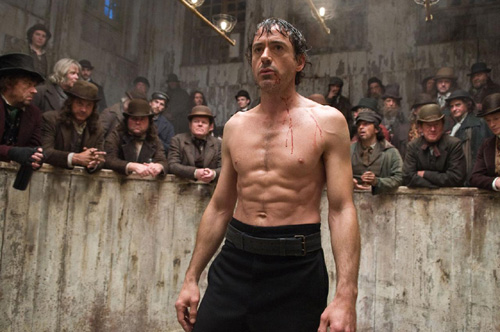
The deductive and observatory were in evidence throughout. From slow-motion cut-aways where Holmes explains to the audience his plan of attack in a given fight scene (and I can't resist dropping in a shot from one such fight here), to his pacing and deliberation, at every stage we are led to believe that Holmes' mind is ticking away non-stop. This is only heightened by the plot, in which it seems a devil-worshipping psycho really has the power of magic or spirits or some such on his side, and he's employing it to vicious effect across London. It's only in the final denouement that we get to hear Sherlock's alternative reasoning. Perfectly timed to crush any expectations we might have created throughout the film. 


Irene Adler (Rachel McAdams) makes an appearance too, as the only woman to hold Holmes' attention for any length of time. She's a sneak-thief, and matches Holmes' deduction and lust with deception and connivery. It's a great on-screen relationship, playful and thrilling, and McAdams does herself justice, and stumbles through her accent just about. 


This film just about ticked the right boxes. There was never a dull moment, and Holmes and Watson were a playful and engaging pair. The story ticked along at a rate of knots, and even the over-blown effects and tomfoolery didn't dent my enjoyment. All in all, fun. No great picture, no masterpiece. But no offence to Arthur Conan Doyle's greatest creation either.


~~~
2009
Robert Downie Jr, Jude Law, Rachel McAdams
dir. Guy Ritchie

Sunday, 10 January 2010

The Death of Achilles (Fandorin 4)

Erast Petrovich Fandorin returns, after six years in Japan at the Russian Embassy there, to Moscow, to his duties with the Third Section. But on the morning of his arrival he's met by a shock; his old acquaintance, General Mikhail Sobolev, is staying in the same hotel as Fandorin. What's more, Sobolev is found dead that very morning. Fandorin, of course, takes on the case immediately, out of duty and a sense of loyalty to his old friend.

What's changed then, to stop this being just same-old same-old? Well, for a start, Fandorin hasn't wasted his time while in Japan. In fact, he's immersed himself as much as he can in Japanese culture, particularly in focusing his mind and body to perfection as a detective and man of action. Furthermore, he now has in tow the lovable rogue of a retainer, Masa, who's bloodthirsty and lustful nature lead to all kinds of difficulties, not least because Masa doesn't speak a word of Russian.

Structurally Boris Akunin has also, once more, tried something a little different. He's returned to describing his hero from the third person, as in Azazel, rather than through the impressions or reports of other characters. But instead of a linear narrative, the tale is divided firmly into two; firstly Fandorin travels about town following up leads and tracking down the culprit behind what clearly could not have been a natural death; then we are transported to the Caucasus and the childhood and early life of a boy with strange pale eyes. This boy later becomes an assassin, and from there establishes a reputation as not only a killer-for-hire, but a man who never misses his mark. He is given the name Achimas, and leads a life of crime under barely any suspicion at all, so consummate are his abilities. It is only as the narration of his life story catches up to his most recent task that it becomes clear that Fandorin may have met his match in Sobolev's killer.

Akunin remains a master at spinning out a story with poise and charm; there's plenty of wit in this narrative, especially in the exchanges between Fandorin and Masa, and there's a fair share of mystery and thrills to keep the reader engaged. There's also a sensitivity to Achimas here, a sensitivity elsewhere not seen in Akunin. Could this be a stepping stone towards a more ambivalent view of Fandorin's enemies? Perhaps not, but I look forward to seeing where the series gets to next.

~~~
2005

Boris Akunin, translated by Andrew Bromfield

Tuesday, 5 January 2010

The Turkish Gambit (Fandorin 2)

In Britain, The Turkish Gambit was published as Turkish Gambit, and appeared third in the Fandorin series issued by Weidenfeld & Nicolson and translated by Andrew Bromfield. It becomes apparent with reading that the action of The Turkish Gambit follows closely from the close of The Winter Queen (reviewed here); I'm even inclined to start using the Russian title for that novel, too, as it informs as to the major criminal organisation Fandorin finds himself pitted against once more: Azazel.

Azazel have been recruiting charismatic orphans and preening them for nefarious, high-flying positions. After the disastrous conclusion of Fandorin's first adventure, he seeks oblivion by leaving the Third Section (Russia's detective bureau) and journeying to join the Russian front where the troops are engaged in the Russo-Turkish war.

But Akunin is more wily than to describe this to us in such a straightforward manner. Instead, we meet Varvara Andreevna Suvorova, a self-proclaimed 'modern woman' who is travelling to find her betrothed, Pyotr, who is also fighting at the front. In being so bold, and undertaking such a journey, Varya is sure she will prove both her devotion to Petya and her status as a thoroughly in-control feminist. But disaster strikes and she is left stranded in a Muslim tavern that's allegiance to Russia, given its proximity to Turkey, is dubious. Enter a mysterious young man with a stammer, a brusque manner, and hair that is black apart from white temples: Fandorin. Varya is rescued by him, but immediately takes offence at his prickliness. There's a delicious discrepancy between our own knowledge of the terrible tragedy Fandorin has suffered and Varya's own frustration with this taciturn gentleman, enhanced, of course, by our own sympathy for the young man, so clearly marked by his past experiences.

If Varya is upset by Fandorin, she's quickly offered diversions: cavalry commander Mikhail Sobolev, along with a host of journalists, meet Fandorin and Varya on the road to the Russian camp in the nick of time, carrying out a daring rescue against a band of bashi-bazouks. From there, the plot speeds up significantly; it's clear there's some sort of mole in the Russian camp, and Fandorin is tasked with worming him out. Furthermore, a certain Anwar Effendi has surfaced in the Turkish forces, a man already identified as one of the key members of Azazel. Fandorin, while refusing to return to the Third Section proper, must struggle between outwitting his wily enemy while also finding the mole.

The real charm of the whole tale comes from Varya; most of the narrative is told from her perspective, and again there's delightful humour in how she curses herself for being so attracted to some of the gentleman in the camp, each of them dashing and brave. Her betrothed, Petya, proves himself to be an utter wimp, and one can't help but feel pleased that Varya has other options on her plate. But most pleasing of all is her gradual warming towards Fandorin, whom she discovers is not only younger than her, but has dealt with more than she could imagine. As she notes how she has realised, with horror, that she's been missing him, the sense of triumph for Fandorin is wonderful. He's not sought her affection one bit, nor is he interested, but he's also acted with constancy and bravery throughout, without ever attempting to emphasise it. The bittersweet finale of the book, where Fandorin may be about to solve the case but never get the girl, is a joy to read.

Akunin's done something remarkable; he's taken that excellent character first fleshed out in Azazel and forced him through a terrible mishap, adding yet another layer of depth and engagement to an already charming individual. Fandorin's impressive powers of deduction are now tempered by patience and silence, making him all the more resolute and inspiring. A brilliant read.

~~~
1998

Boris Akunin, translated by Andrew Bromfield

Sunday, 29 November 2009

The Omega Man

I read I Am Legend a little late; it has been reckoned by some as the single most important vampire novel after Bram Stoker's Dracula. Richard Matheson's novella is chilling in its portrait of the conflict a lone man faces after the world is swept by a plague; not only do the blood-sucking humans now wish to kill him, but every day is a battle with his own conscience as he searches for a cure to the virus and tries to overcome the desire to end it all.

Francis Lawrence's I Am Legend (2007) drew upon that aspect of loneliness, of a single man alone against the world. But in my view some of the charm of the book was lost as he transferred the setting from the West Coast to urban New York and turned the vampires into little more than mindless creatures. Will Smith's performance as Robert Neville was admirable, but not remarkable.

The Omega Man is the attempt of a different decade to put I Am Legend on the screen. Charlton Heston stars as Robert Neville, but here Boris Sagal has stayed more closely to the plot of the novel, in some aspects; we get a glimpse of the organisation and intention of the vampires (even if bloodsucking is not really mentioned at all; perhaps that's for the best, avoiding the standard vampire tropes that seem to abound); Neville's isolation is similarly emphasised, and more than once we see his inability to relate to others after his long silence has left him talking to himself and playing games with himself. The drinking is there too and the empty rage at his impotence.

The plot does differ from the novella; in exactly the same way as the later film, the film-makers have decided a love interest is necessary. Certainly, there is an interest in the book; but that interest is central to the plot and continues a strong message about the risk of love. In both films, the love interest only serves to further the bravery of Neville but also tie him down. There's no risk involved to himself except by the sacrifices he chooses to make for a woman.

Cinematographically, The Omega Man is beautifully realised. The desolation and ruinous husks of buildings that surround Heston as he runs around hunting the vampires are striking and intensify that sense of loneliness. The score is also a highlight, as it sets the tone perfectly. A key shift as Neville enters a darkened building and the hairs stood up on the back of neck in anticipation for discovering one of the 'Family'. Heston's performance is strong as well.

But it's badly structured plot and poor performances from the rest of the cast that let the film down. The dialogue between Heston and the love interest Lisa (Rosalind Cash) is stilted and the children he finds are wooden at best. It's entirely frustrating because the dynamism and anticipation that has been built earlier in the film falls flat. There is no sense of a climax. In fact, because the plot has been transposed somewhat, what should be a final set-piece occurs half-way through the film, entirely robbing the ending of anything with as near as brutal as the original's final moments. It's not that this is a poor adaptation of a book; it's not. It's that in making an adaptation some choices and some performances let the side down too much for it to be entirely enjoyable.

***
1971

Charlton Heston, Rosalind Cash, Anthony Zerbe

dir. Boris Sagal